
Diversion Of Oil Tankers Around Southern Africa Highlights Limitations Of Iran's Maritime Strike Capabilities
🇮🇷 🇸🇦 🇺🇸 🇾🇪 | Memo

Memos will briefly refer to a news development, media report, new or historic image/video, map, and the like. You will not receive email notifications for newly posted memos, which can be found via specific tags corresponding to specific sections/newsletters, where you will find longer posts.
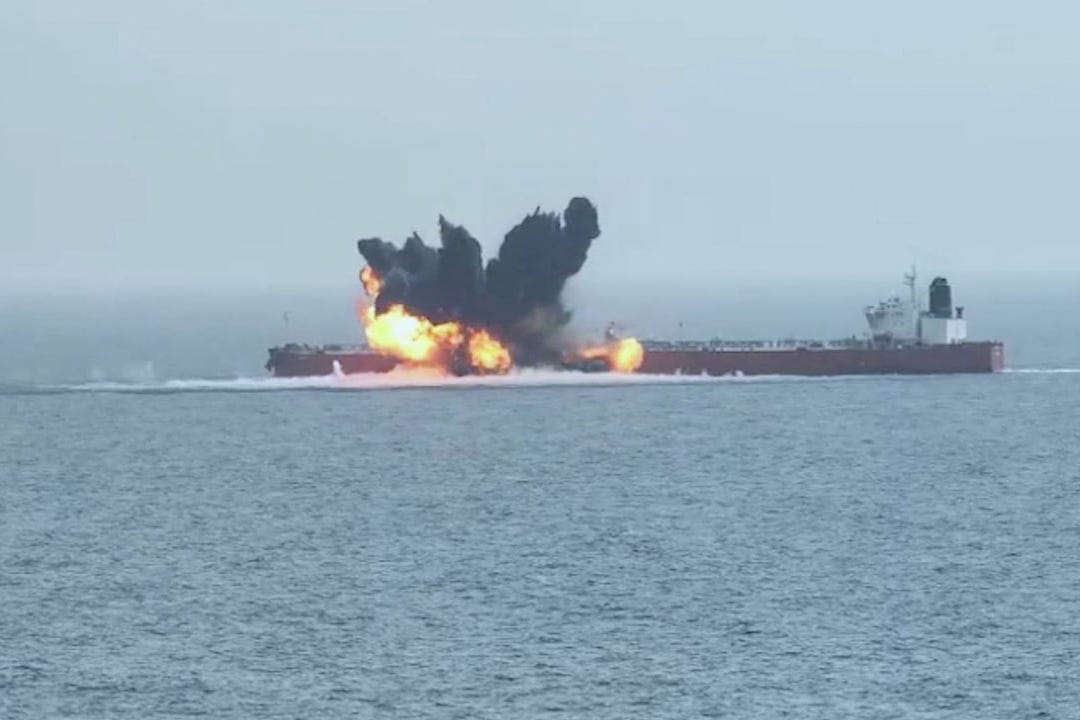
Iran and Ansarallah are together exerting immense influence on maritime traffic in the Strait of Hormuz and the Bab al-Mandeb. As a result, there has been a significant increase in the number of ships transiting between the Atlantic basin and Asia by taking the longer route around South Africa. This notably includes tankers carrying Saudi oil loaded at the country’s Red Sea oil terminals via the Suez Canal or SUMED pipeline. For both Iran and Ansarallah, such measures reduce the efficacy of their de facto blockade-type actions. It bears emphasis that there are two interrelated dynamics here: first, the physical supply and flow of goods (not limited to oil) continues, even if it continues at lower volumes and at higher costs. Second, however, trade continues because the maritime insurance market has adapted to the substantially elevated threat level via higher premiums.
Any actor in the position of Iran and Ansarallah needs to attempt to do two things. First, ships must, if only periodically, be sunk outright, not merely subject to what often amounts to nuisance-level damage (on account of the interplay of the resilience of large contemporary merchant ships and the limited destructive effects of typically smaller warheads that impact such a merchant ship above the waterline). Second, ships that have been rerouted need to be targeted far from the area of active blockade-type actions so as to further influence the maritime insurance market. Iran and Ansarallah could, for example, have built up an external operations capability in a permissive locale such as Mozambique with the aim of, for example, launching fixed-wing strike drones and/or uncrewed surface vessels (USVs) against oil tankers and other ships avoiding the Strait of Hormuz and Bab al-Mandeb.
Geographically expanding the scope of a war in such a dramatic manner, even if such distant targets are likely to be subject to no more than nuisance-level damage, is unlikely to bring maritime shipping to a halt or fundamentally alter the course of a war, but will ensure that a “simple,” if expensive and logistically taxing, bypass around the southern tip of Africa will come at a much higher cost. Stated differently, such an approach will mean that tankers carrying Saudi oil (in this case) will be targeted wherever possible, not only within the reach of ground-based maritime strike capabilities in Iran and Ansarallah-controlled areas of Yemen. As things stand, there are no public indications that Iran and/or Ansarallah have such a capability in place, let alone any indications that any such attacks have been attempted thus far.