

Memos will briefly refer to a news development, media report, new or historic image/video, map, and the like. You will not receive email notifications for newly posted memos, which can be found via specific tags corresponding to specific sections/newsletters, where you will find longer posts.
While the ongoing American and Israeli War against Iran and the regional externalities thereof can be interpreted as offering evidence that Iran has the wherewithal to overcome adversary ballistic missile defence (BMD) capabilities, the fact remains that Iran faces major challenges going forward for reasons beyond the damage inflicted on its ballistic missile industry. One such challenge was put into motion long before the June 2025 Iran-Israel War, let alone the ongoing conflict.
As a general matter, the Gulf Arab states accurately discerned the trajectory of qualitative and quantitative advances in Iranian ballistic missile technology and capabilities and proactively built up their BMD capabilities in response. Gulf Arab efforts ramped up after Iranian material support to Ansarallah in Yemen, which included ever-expanding support in the realm of ballistic missiles, fundamentally reshaped air defence and BMD dynamics in the region over the 2015-2020 timeframe, which is notably before Iran made the very major strides in its ballistic missile technology that led to the present-day Iranian arsenal.
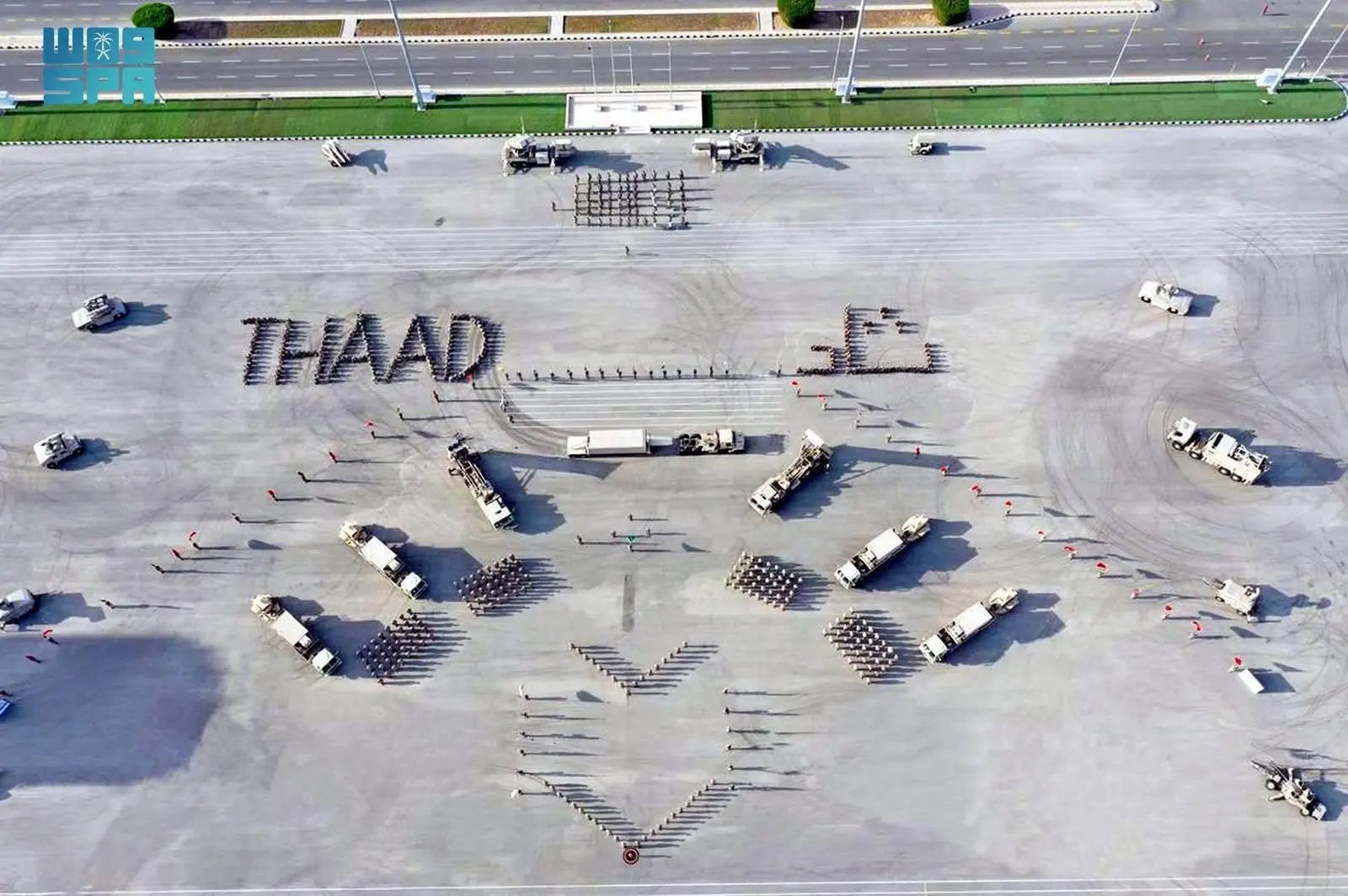
Before the start of the June 2025 Iran-Israel War, Saudi Arabia and the UAE were set to eventually deploy a total of nine THAAD batteries and some 600 associated MIM-401 Talon interceptors between them, with well-resourced Qatar expressing interest in following suit. As a result, Iran faced a daunting long-term challenge in the realm of longer-range ballistic missiles, which are, all else being equal, not only more expensive and more complex to procure, but also less accurate relative to shorter-range ballistic missiles that have the range to cross the 200-300 kilometer-wide Persian Gulf.
Although the ongoing American and Israeli war against Iran and the regional externalities thereof highlight how Iran is able to pressure American, Israeli, and Gulf Arab air defences and ballistic missile defences, it is important to bear in mind that Iran’s adversaries do not require perfect defences for BMD to make a difference, not unless Iran is to employ nuclear-armed ballistic missiles against which BMD systems must, in practice, be 100% effective. Iran may well be able to once again induce the depletion of Gulf Arab BMD systems such as THAAD and Patriot with or without American BMD support to the Gulf Arabs, but the existence of nine or more THAAD batteries on the Arabian Peninsula alongside hundreds of MIM-401 interceptors is very far from nothing if one takes the role of an Iranian military planner. Going forward, the well-resourced Gulf Arab states can only be expected to double down on Patriot and THAAD, as well as other systems. Once Saudi Arabia receives its full consignment of THAAD batteries, the aggregation of Gulf Arab THAAD batteries will have significant effects on Iranian military planning, even with de facto forward-deployed Iranian strike munitions in Yemen—through the services of Ansarallah—providing Iran a promising way to even the odds.