

Memos will briefly refer to a news development, media report, new or historic image/video, map, and the like. You will not receive email notifications for newly posted memos, which can be found via specific tags corresponding to specific sections/newsletters, where you will find longer posts.
Note: Part of the following text was originally posted on my 𝕏/Twitter account. The original text has been expanded on and edited for grammar and style in this post. Link
Scratchpad-themed posts briefly introduce ideas and notes that may be followed by a memo or longer analysis at a future date. Posts filed under the scratchpad section/newsletter are only accessible to subscribers, whether free or paid. For the purposes of navigating this site, scratchpad-themed posts are organized under the region-themed topic-themed subsections under “Memos.” You will not receive email notifications for newly posted scratchpad-themed posts.
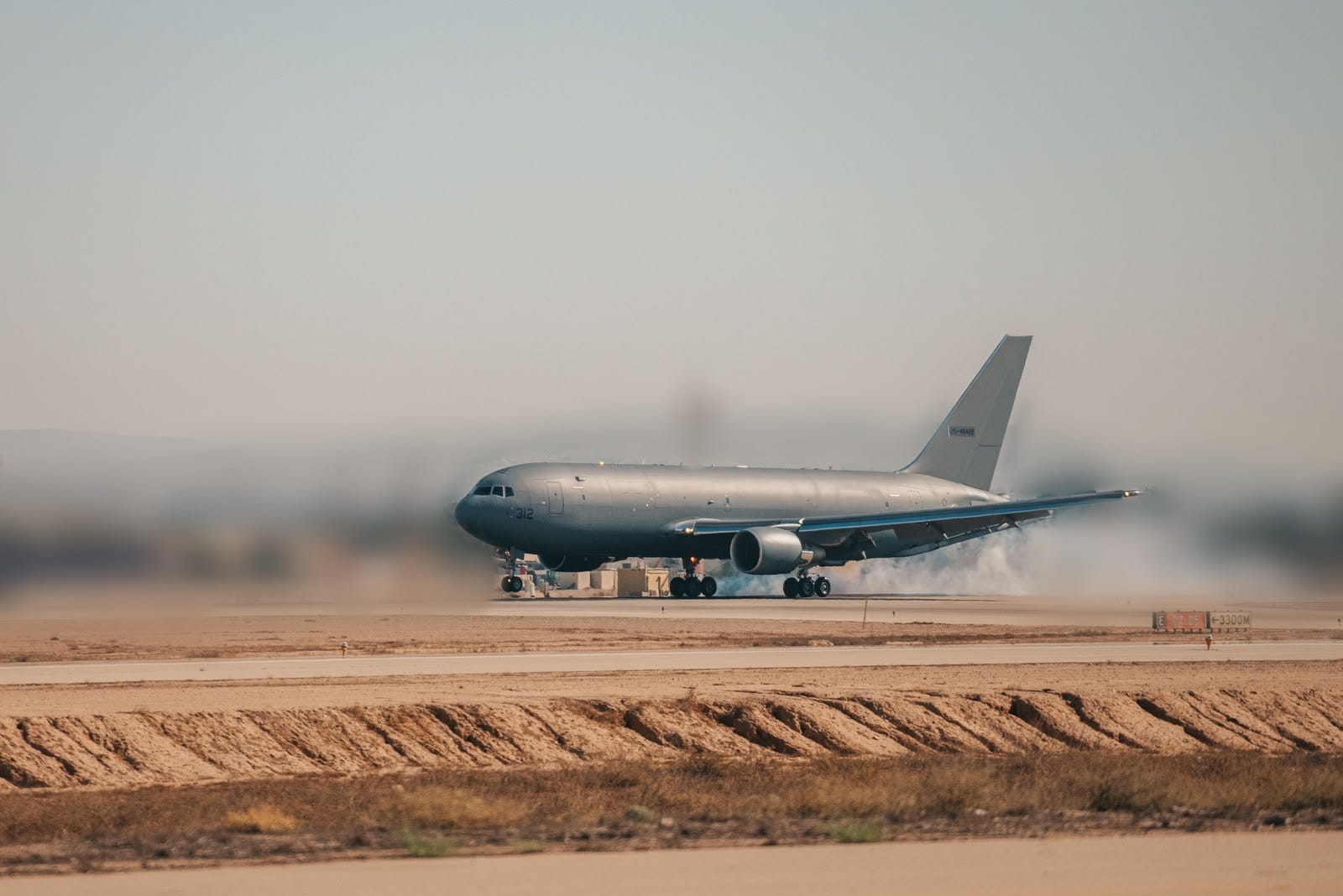
The Israeli Air Force (IAF) has received its second KC-46 aerial refuelling/tanker aircraft. Once delivered, the IAF’s future fleet of at least six KC-46 aerial refuelling aircraft will constitute a like-for-like replacement of a similarly-sized fleet of KC-707 aerial refuelling aircraft. There is, however, a very major qualitative difference with outsized implications for countries across the Middle East, above Iran, but also for the likes of distant Pakistan.
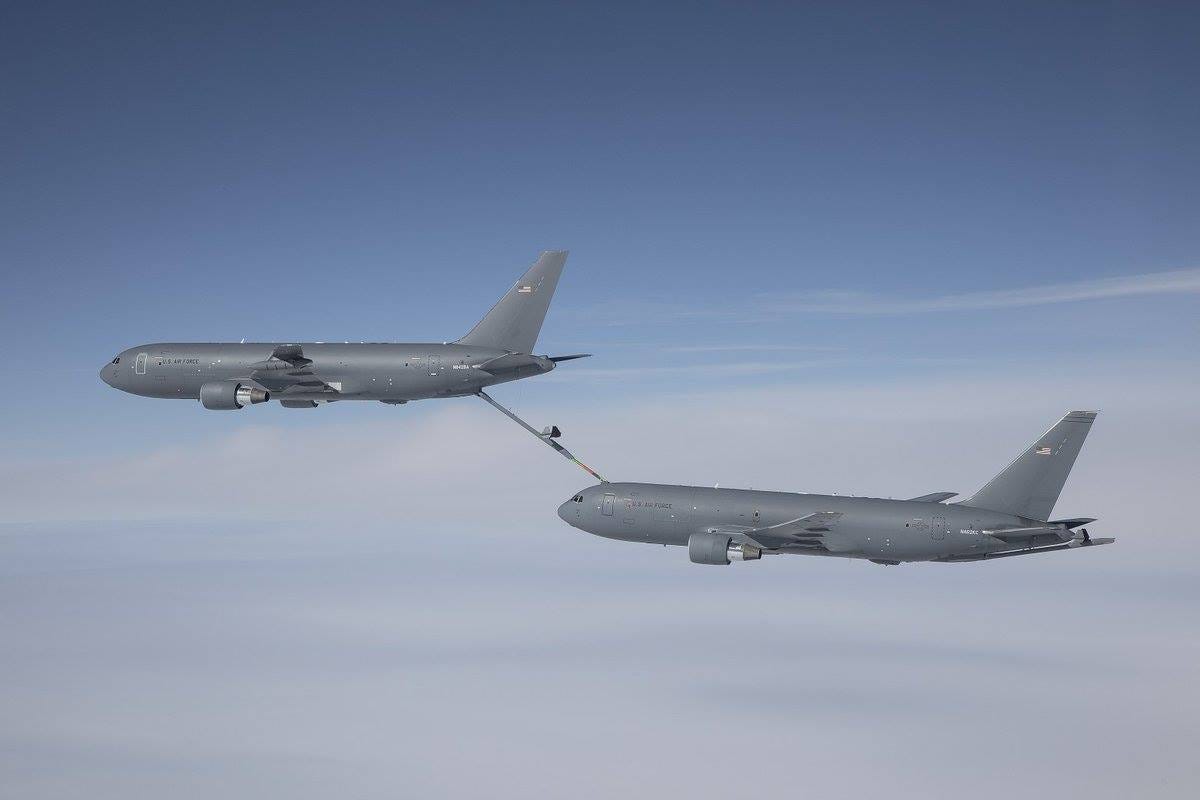
The KC-707, unlike some of the related but nevertheless distinct KC-135 aircraft operated by the U.S. Air Force, cannot itself be refuelled in flight on account of lacking a receptacle for refuelling via the flying boom method. The KC-46 can, in contrast, be refuelled by another flying boom-equipped aerial refuelling aircraft, and can, as such, support the operations of, for example, IAF F-35 fighter aircraft over a radius of 2000 or more kilometers. This will bring the entirety of Iranian territory, including the country’s extreme northeast and southeast, within range of the IAF, at least insofar as the IAF is willing to forgo refuelling sorties in support of other missions. It will also bring Pakistani territory within range of the IAF, although it bears mentioning that the IAF is likely to make use of stand-off air-launched ballistic missiles against Pakistan, much as it has against both Iran and Qatar. As a result, IAF KC-46 aerial refuelling aircraft are more likely to bring Israeli F-15I and/or F-16I aircraft equipped with such standoff munitions within range of Pakistan, which is to say to a launch position over Iran, than support the transit of IAF aircraft into Pakistani airspace.
For Iran, this is an expected development long in the making, and one that could have transpired much earlier had Israel made different investment priorities. The June 2025 Iran-Israel War highlighted the logistical limits of the IAF on accounting of operating on a sustained high-intensity basis over an operating radius of 1000 or more kilometers, which lowered sortie generation as well as the maximum payload of IAF fighter aircraft not lavishly supported by aerial refuelling aircraft, the IAF’s fleet of which was (and remains) too small to provide other than on a case-by-case basis for specific missions. The ongoing American and Israeli war against Iran, in contrast, demonstrated what could happen when the United States threw its weight around by forward-deploying more than two hundred aerial refuelling aircraft to support both IAF and American combat operations. The IAF is never going to be able to match what the USAF has brought to bear in recent months, but even a modest expansion of the IAF’s KC-46 fleet to a low two-digit figure will likely have an outsized effect on military dynamics across the Middle East and perhaps as far as Pakistan.