

Concepts–themed posts engage in inherently somewhat speculative analysis. I contend that any serious analysis must engage with the world both as it is and as it can be. Avoiding mindless empiricism requires cognizance of what is and what is not within the realm of possibility. Concepts-themed posts engage in this type of analysis.
The Iranian-designed Shahed-136, which is known as the Geran-2 in Russian service, is the prime example of a lower-cost—and lower capability—strike munition design that enables militaries to service dramatically expanded target lists in a manner that was previously unimaginable. The Shahed-136/Geran-2, and similar fixed-wing propeller-driven strike drones—less expensive, less complex, slower, and easier to shoot down counterparts to turbojet/turbofan-powered cruise missiles—have considerable potential in military operations worldwide, notwithstanding the underway measure-countermeasure competition that has resulted in the advent of a new generation of low-cost air defence capabilities, including electrically-powered armed multirotor drones turned budget surface-to-air guided munitions that are capable of intercepting quite slow propeller-driven strike drones powered by modest piston engines.


Taking full advantage of the potential offered by propeller-driven strike drone designs in the vein of the Shahed-136/Geran-2 will likely require, at the very least, a more diverse array of warhead options so as to optimize the effects of a fairly small and lighter warhead against a greater diversity of target types/classes. In its standard configuration, a Shahed-136/Geran-2 is equipped with a 50-kilogram class high explosive warhead. Both Russia and Iran also employ the Shahed-136/Geran-2 in a reduced-range configuration that features a 90-kilogram class high explosive warhead.


Russia has employed a series of Iranian- and Russian-built warheads with its Shahed-136/Geran-2 strike drones. Publicly known warhead types include:
High explosive-fragmentation warheads with a singular shaped charge.
A high explosive-fragmentation warhead with multiple explosively formed penetrators (EFPs).
High explosive-fragmentation warheads that feature incendiary material.
A pure thermobaric warhead.
While Russia informally unveiled Shahed-136/Geran-2 strike drones equipped with an airburst fusing mode around the autumn of 2025, the Shahed-136/Geran-2 has not to date been seen with two very useful warhead types.
Submunition-dispensing warhead
The first is a submunition-dispensing warhead (i.e., cluster munition-dispensing) warhead, which will require a modified airframe that incorporates a submunition release/ejection mechanism. This should be a fairly straightforward undertaking when it comes to a very slow propeller-driven strike drone design that can be subject to major modifications without onerous aerodynamic penalties. Consider how a typical 155 mm submunition dispensing artillery shell weighing around 40 kilograms can dispense 60-80 submunitions over a radius of 100 or more meters. The likes of a Shahed-136/Geran-2—particularly an airframe in the higher payload reduced-range configuration which can be equipped with a 90-kilogram class warhead—can not only dispense a larger number/heavier load of submunitions—a thick casing is not required in the manner of an artillery shell subject to extreme chamber pressures—but also dispense said munitions over a larger surface area. The advent of a submunition-dispensing low-cost propeller-driven strike drone design will have major implications in the interrelated areas of air base attack and air base resilience.
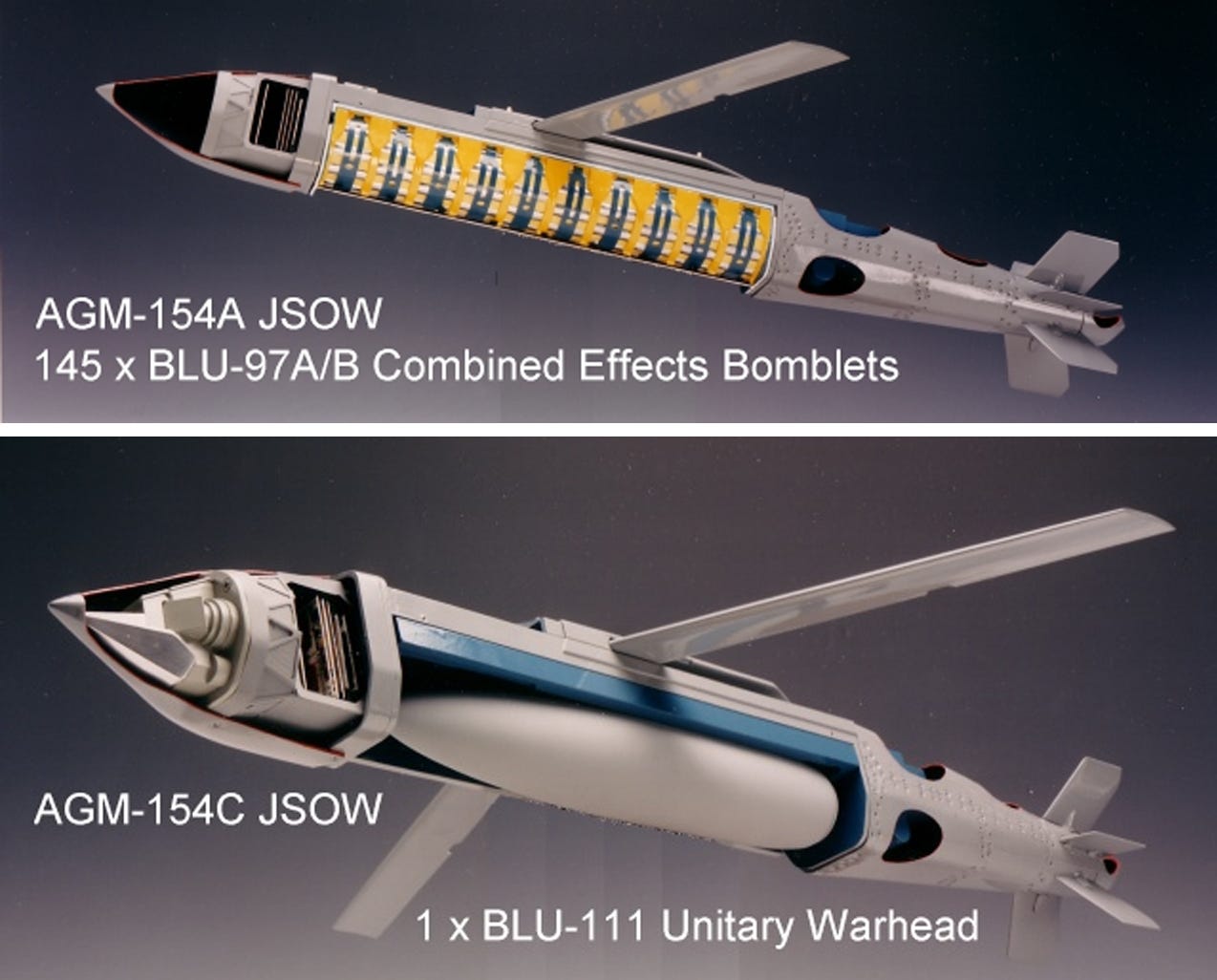
Penetrator Warhead Optimized For Use Against Runways
Another approach concerns the use of a penetrating warhead design that is optimized to create (fairly small/shallow) craters in runways, so as to develop a low-cost means to disrupting flight operations at distant airfields—craters/holes in the ground can be filled in and runways can be repaired, so cratering runways is primarily a means of buying time and disrupting adversary opereations rather than a likely approach to securing military victory. While the Shahed-136/Geran-2 has been used with penetrating warheads that are optimized to maximize damage to structures such as electricity substations and heavy-duty industrial machinery in power stations, these are not the same as a warhead that is intended to create a single crater/hole of maximum possible depth. A useful reference design to have in mind is the late Cold War French BAP-100 bomb, which was explicitly designed to crater runways and complement the larger, heavier, and better-known Durandal. The air-dropped BAP-100, which featured both a parachute and a solid-propellant rocket booster, had a total weight of 32.5 kilograms while equipped with a 18.5 kilogram warhead. Through the use of the rocket booster, the air-dropped BAP-100’s shaped charge warhead could reportedly penetrate up to 30 centimeters of reinforced concrete when equipped with a time-delay fuse.
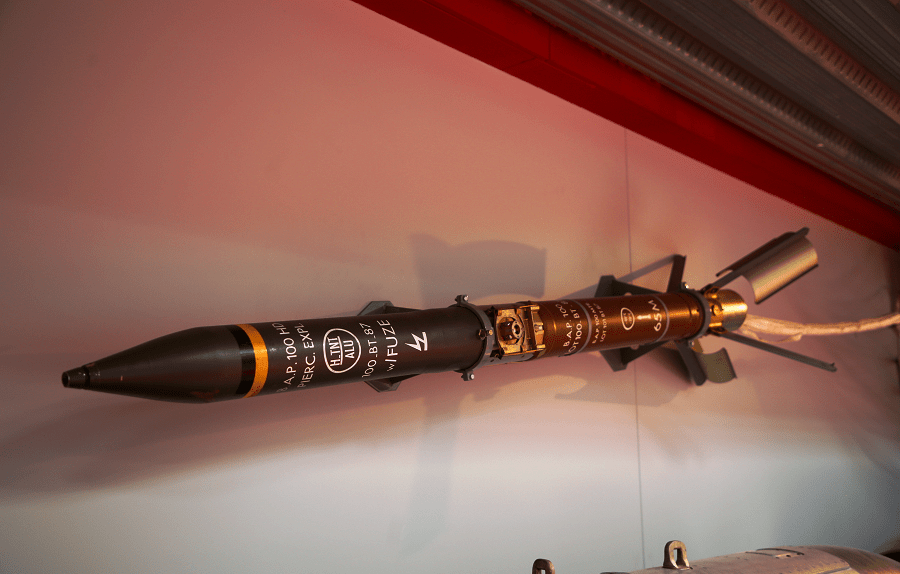
It bears emphasis that even a propeller-driven and piston engine-powered Shahed-136/Geran-2 and similar undertaking a terminal dive will struggle to reach a top speed equivalent to one-fifth that of the air-dropped and rocket-boosted BAP-100. The BAP-100 is, as such, merely invoked in this post to illustrate the potential for a penetrator warhead for use against runways as well as other structures, such as bridges. A low-cost low-payload turbojet-powered cruise missile design will have a much higher cruise speed and top speed during a terminal dive and will be much more suitable as a means of delivering a penetrator warhead. See, for example:

All things considered, propeller-driven fixed-wing strike drones are unlikely to disappear even with the intensifying measure-countermeasure competition that has resulted in the increasingly widespread deployment of low-cost air defence capabilities, including electrically-powered interceptor drones. Propeller-driven strike drones are an incredibly inexpensive means of delivering a given payload per kilogram-kilometer. The availability of additional warhead options will likely only increase the appeal of low-cost propeller-driven strike drone designs, which inherently offer militaries the ability to service dramatically expanded target lists in a manner that was previously unimaginable.