
Ansarallah's Strike Munitions Have Amplified Effects Following SAM Expenditures In War Against Iran
🇮🇷 🇸🇦 🇾🇪 | Memo

Memos will briefly refer to a news development, media report, new or historic image/video, map, and the like. You will not receive email notifications for newly posted memos, which can be found via specific tags corresponding to specific sections/newsletters, where you will find longer posts.
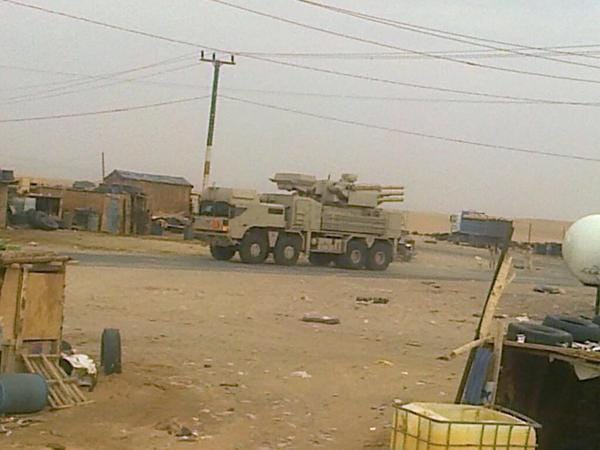
As explained in a recent memo, the de facto forward deployment of Iranian strike munitions in the areas of Yemen controlled by Ansarallah has long fundamentally reshaped military dynamics in the Middle East.

The American and Israeli war against Iran, and the regional externalities thereof, have amplified the effects of Ansarallah’s Iranian-supplied strike munition arsenal, not least following the turbulent changes in Yemen in the December 2025-January 2026 timeframe, which amounted to a major rupture between Saudi Arabia and the United Arab Emirates, the withdrawal of Emirati forces—including Emirati air defence systems—from Yemen, and the severe weakening of pro-secessionist actors and forces in southern Yemen.
Since the de facto resumption of the Yemeni Civil War in recent weeks, Ansarallah has launched strike drones against its Yemeni adversaries as well as Saudi Arabia. This includes the use of (very) short-range ballistic missiles against the port city of Mocha from a reported launch position located some 100 kilometers away. The use of ballistic missiles in such a manner is hardly new in Yemen, with the practice being first established in the 1990s and repeated multiple times in the ongoing Yemeni Civil War, including against Saudi and Emirati forces that intervened in the conflict.
The Gulf Arab states responded to the de facto forward deployment of Iranian strike munitions of ever-increasing range and greater sophistication to northern Yemen by reorienting part of their air defence and ballistic missile defence capabilities against threats originating from the south and southwest, while Saudi Arabia and the United Arab Emirates also deployed air defence systems, including Patriot batteries, to Yemen with the aim of protecting their foward-deployed forces and allied forces against quite accurate short-range ballistic missiles launched by Ansarallah, as well as strike drone attacks.
As things stand, the reported depletion of Gulf Arab, as well as American, surface-to-air missile and especially ballistic missile defence interceptor stocks means that Ansarallah is likely to have what amounts to a free hand when it comes to deploying ballistic missiles and their analogues, namely short-range guided artillery rockets, against targets across Yemen in the manner it has undertaken strikes against Mocha. Saudi Arabia and the United Arab Emirates are exceptionally unlikely to deploy, for example, one or more Patriot batteries to such areas, not unless a firm peace takes hold vis-a-vis Iran, and Ansarallah’s ballistic missiles are likely to go unintercepted. The United States, which is grappling with the consequences of its own depleted stock not only vis-a-vis Iran but also vis-a-vis China, is also unlikely to get involved, and will likely have to judiciously expend naval ballistic missile defence interceptors should hostilities resume between the United States and Ansarallah.
🇮🇷