
Chinese AEW&C Aircraft and The Prospective Effectiveness of American, Taiwanese Strike Drones
🇨🇳 🇹🇼 🇺🇸 | Memo

Memos will briefly refer to a news development, media report, new or historic image/video, map, and the like. You will not receive email notifications for newly posted memos, which can be found via specific tags corresponding to specific sections/newsletters, where you will find longer posts.
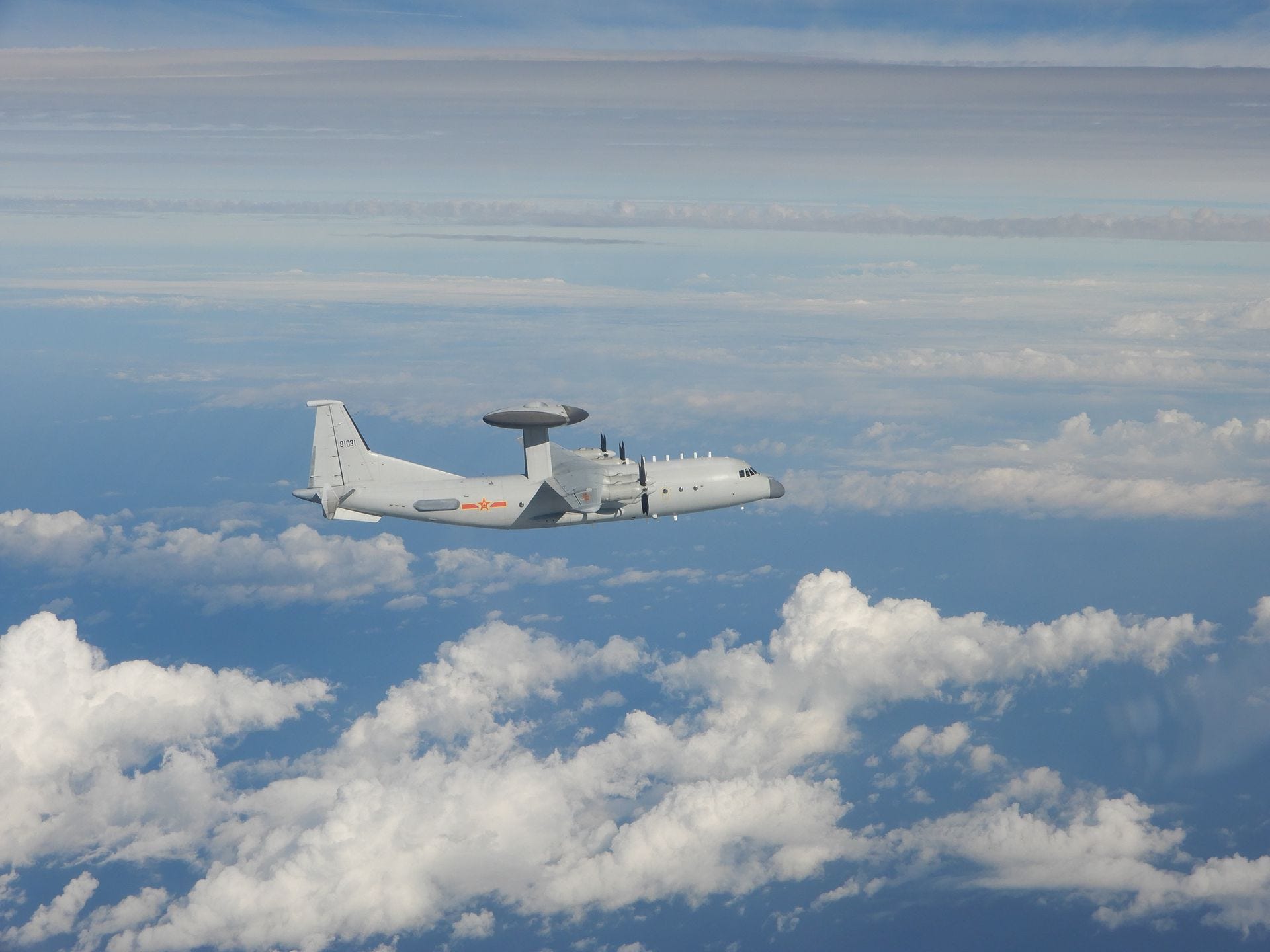
As explained with respect to air defence from the Russia-Ukraine War, airborne early warning and control (AEW&C) aircraft are particularly well-suited to detecting low-altitude targets and alerting friendly fighter aircraft and ground-based air defences to the presence of aerial targets that they may otherwise not detect or detect at a much later time.

Russia and Ukraine operate very few AEW&C aircraft. China, in contrast, operates more than sixty AEW&C aircraft and continues to build more of newer, more sophisticated designs. While China requires a great many AEW&C aircraft for a major conflict scenario involving the United States, it is not unreasonable to assume that a dozen or more of these AEW&C aircraft will be flying over Chinese territory near the country’s maritime frontier at any given time as flying radar pickets. Given this, the prospects for the effective employment of large formations of American and/or Taiwanese propeller-driven strike drones in the vein of the Shahed-136, or even low-cost and low payload-range cruise missiles, to approach the Chinese coastline undetected and thereafter have free rein to fly past China’s forward-most lines of air defences to strike targets in the country’s interior are, all things considered, quite poor.