

Memos will briefly refer to a news development, media report, new or historic image/video, map, and the like. You will not receive email notifications for newly posted memos, which can be found via specific tags corresponding to specific sections/newsletters, where you will find longer posts.
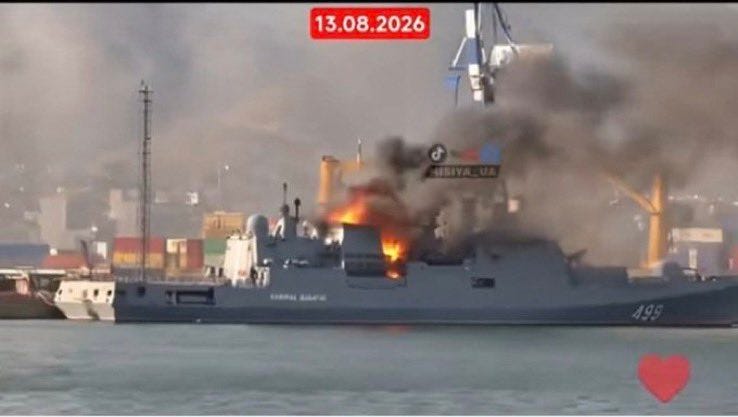
The above recently circulating image is very likely to be AI-generated but nevertheless draws attention to an important dynamic: what remains of the Russian Black Sea Fleet, which has withdrawn from Crimea to Novorossiysk, tends to primarily remain in the relative—but certainly not absolute—safety of port, where the warships and subamarines are periodically attacked by Ukrainian strike munitions, so as to avoid the risks posed by Ukrainian uncrewed surface vessels (USVs), as well as Ukrainian strke munitions at sea. Naval dynamics in the Black Sea over the course of the Russia-Ukraine War have forced the demise of the ill-conceived and much-hyped “Kalibrization” of the Russian surface fleet—as well as Russia’s diesel-electric submarine fleet—which inherently entailed corvettes and frigates briefly heading out to sea to launch a maximum of eight to sixteen—typically just eight—long-range land-attack munitions before having to return to port so as to rearm. As things stand, however, there is a case to be made that the Russian Black Sea Fleet is primarily important as a political target for Ukraine on account of its fast-diminishing value as a means of periodically heading out to sea to launch fairly small quantities of 3M14 Kalibr and 3M22 Zircon strike munitions against terrestrial targets in Ukraine.
According to leaked documents released by Ukrainian sources, production of the 3M14 Kalibr continues for the Russian Navy alongside the related ground-launched 9M729 (and shorter-range 9M728) employed by the Russian Army.

This raises questions as to the wisdom of this approach because the 3M14 can, as per publicly available information, only be launched from the vertical launch system (VLS) cells on Russian warships and from the torpedo tubes of Russian submarines. Russian warships and submarines outside the Black Sea cannot, in practice, attack targets in Ukraine using 3M14 cruise missiles, and the warships and submarines that remain in the Black Sea rarely go out to sea and can, in any event, only launch small salvos of 3M14 cruise missiles.
For much of the Russia-Ukraine War, Russia had greater theoretical launch capacity than it had strike munitions available for launch. Sustained stockpiling for periodic launches was the norm. The situation has changed over time, with Russian strike munition stocks now being much larger as a result of the sustained expansion of production capacity, with the important caveat that Ukraine’s air defences have also improved in the interim, such that a greater availability of missiles does not always translate into a higher penetration rate for Russian missiles. In any event, there are now more ordinarily ship- and submarine-launched 3M14 cruise missiles to go around than there exists launch capacity in the Black Sea. This raises the possibility that Russia will come to deploy the 3M14 as a ground-launched cruise missile from a ground-launch VLS system or similar, at least in the context of the Russia-Ukraine War and, going forward, as a coastal defence system that can also be deployed elsewhere in Russia to launch the missiles launched by Russian warships and submarines from land.
There is precedent for this dynamic in how the ordinarily ship- and submarine-launched 3M22 Zircon rocket-powered quasi-ballistic missile is now being employed against terrestrial targets in a ground-launched capacity using launchers associated with the Bastion-P coastal defence system.

In principle, Russia should be capable of adapting the 3M14 Kalibr for launch from a ground-based launcher in the vein of the launchers employed by the Bastion-P system, as well as the ground-launched 9M728 Iskander-K and extended-range 9M729, which are, unlike the 3M22 Zircon, related to the 3M14 Kalibr. Russia may also come to deploy a ground-based 3S-14 (UKSK) VLS system, perhaps something in the vein of the American Typhon system derived from the Mark 41 VLS.
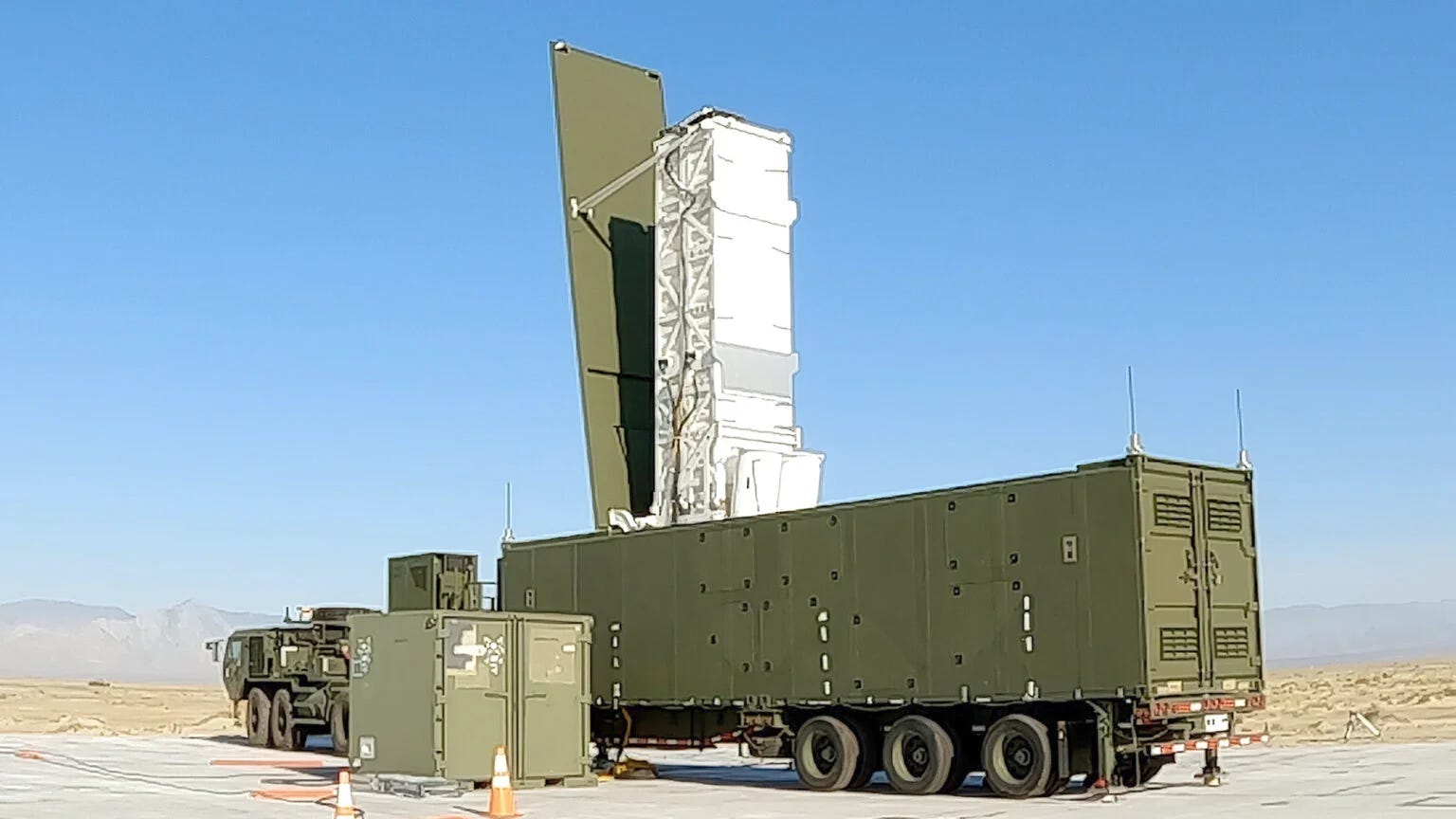
Such a development will allow Russia to readily employ 3M14 cruise missiles from land and draw upon 3M14 production capacity even if every corvette, frigate, and submarine of the Russian Black Sea Fleet is crippled or sunk. As indicated earlier, for much of the Russia-Ukraine War, Russia had greater theoretical launch capacity than it had strike munitions available for launch. The situation has, however, changed as of late, primarily as a result of attrition inflicted by Ukraine and imputed attrition resulting from sustained use over the course of the Russia-Ukraine War. Russia’s bomber force, for example, is fast burning through the flight hours of out-of-production aircraft, not least as a result of operating from very distant airbases, and also suffered heavy attrition during Ukraine’s June 2025 Operation Spiderweb. The Russian Black Sea Fleet is not, as such, alone when it comes to being subjected to diminishing launch capacity, even as the supply of available strike munitions increases in tandem with the ongoing expansion of Russian military production.
Ukrainian sources report that Russia may be working on a ground-launched adaptation of the ordinarily air-launched Kh-101 subsonic land-attack cruise missile employed by Russian bomber aircraft. The Kh-101 is far less well-suited for use as a ground-launched cruise missile than the 3M14 Kalibr, which already has ground-launched counterparts in the form of the 9M728 and 9M729 operated by the Russian Army. Given the incentive structures and the increasingly precious state of what remains of the Russian Black Sea Fleet, the development and deployment of a ground-launched adaptation of the 3M14 Kalibr may not be far on the horizon, not least on account of how the 3M22 Zircon is already being launched from locations far inland. If and when such a development comes to pass, the Russian Black Sea Fleet will be more or less militarily irrelevant, only to serve as a political target for Ukraine, thereby bringing the ill-conceived and much-hyped “Kalibrization” chapter of the Russian Navy to a close, at least in the Black Sea context and quite possibly beyond.