

Memos will briefly refer to a news development, media report, new or historic image/video, map, and the like. You will not receive email notifications for newly posted memos, which can be found via specific tags corresponding to specific sections/newsletters, where you will find longer posts.
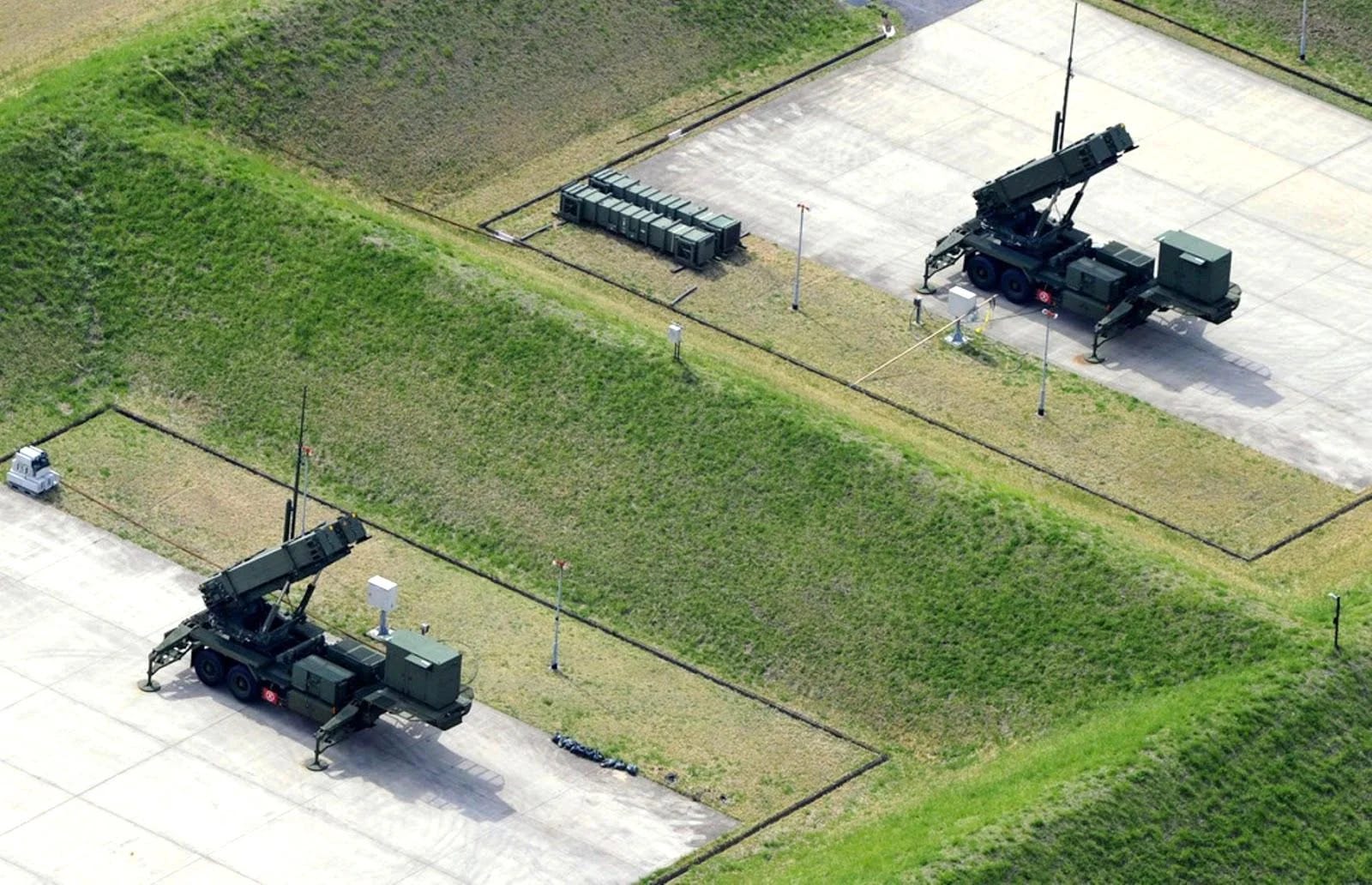
The 2026 American and Israeli war against Iran has laid bare important dynamics in the world of ballistic missile defence that are particularly pertinent to Japan, notwithstanding significant variance in the areas of technology and geography in the Middle East relative to what Japan faces vis-a-vis China in particular. One major question for Japan concerns the future of the country’s large inventory of American-built Patriot surface-to-air defence systems, which have been upgraded to the ballistic missile defence-optimized (BMD) PAC-3 standard and now use the latest PAC-3 MSE interceptor, the American stocks of which have been significantly depleted over the course of the ongoing war against Iran, with major implications for Japan and the Western Pacific more generally.

In 2022, Japan announced plans to upgrade its existing force of twenty-four Patriot batteries/firing units by procuring the new American LTAMDS radar. Unlike the fire control radars associated with Japan’s existing Patriot systems, which are limited to a field of view of 120° and thereby restrict the coverage of a given Patriot battery to a specific wedge-shaped sector at any given time, the new LTAMDS radar incorporates two additional radar antennas to offer 360° of coverage. For a sprawling country with widespread line-of-sight restrictions imposed by natural and anthropogenic terrain, and in a context of an increasingly multi-axis Chinese strike munition threat in particular, upgrading Japan’s Patriot systems through procurement of LTAMDS radars is an obvious albeit very expensive choice.
One of the challenges that Gulf Arab and American Patriot units encounter in the Middle East is rooted in the often multi-axis nature of Iranian attacks, which are notably not limited to strike munitions launched from Iranian territory on account of the existence of Iran’s Iraqi non-state allies. Patriot was originally designed for use near the Inner German Border against threats emanating from the east, in a context in which geography did not allow the Soviet Union and Warsaw Pact to launch strike munitions that approached Patriot batteries from the west or south. For a long time, Japan could, for the most part, similarly arrange its Patriot batteries toward certain directions in China and North Korea. The qualitative and quantitative expansion of China’s conventional strike capabilities, however, means that Japan now faces a dynamic not entirely dissimilar to what American and Gulf Arab Patriot batteries encountered vis-a-vis Iran, although there are significant sources of variance in the areas of technology and geography.
While procuring LTAMDS radars should be straightforward, there is a major wrinkle given how Tokyo has so far indicated little interest in the accompanying new American Integrated Battle Command System (IBCS). Japan instead appears intent on integrating the new LTAMDS with its own adaptation of the existing Patriot control systems—the new LTAMDS radar is not compatible in its current form. While Japan has the wherewithal to address this technical challenge, there will be opportunity costs associated with forgoing an upgraded Patriot configuration that is more or less identical to that which the United States plans to use for the foreseeable future.
Japan received its first Patriot system in 1989, and Japanese systems have undergone various upgrades over the years, including a major upgrade to the PAC-3 standard, which Japan first deployed in 2007, and the integration of the latest PAC-3 MSE interceptor, which Japan began to deploy in 2019. With a major upgrade in the form of new LTAMDS radars offering 360° coverage, Japan’s Patriot systems may continue to serve as a central part of the country’s air defence and ballistic missile defence capabilities over the coming decades.