
Chinese Tacit Cooperation and Japan's Plans to Evacuate the Sakishima Islands
🇨🇳 🇯🇵 | Commentary

Commentary-themed posts are intended to broach or highlight a specific issue, not limited to recent and ongoing events. These posts will typically be much shorter and less detailed than analysis-themed posts.
Japan intends to evacuate civilians residing in the Sakishima Islands in the event of a major cross-Taiwan Strait crisis or conflict. Relocating some 100,000 civilians of all age groups from the Sakishima Islands—which constitute a subset of the larger grouping of the Ryukyu Islands Chain and notably do not encompass the heavily populated island of Okinawa—to the primary landmasses of the Japanese archipelago will likely require what amounts to an all-of-government effort supported by the privately-owned shipping and aviation sectors. Tokyo will, however, likely also require support from another unexpected source: cooperation, whether tacit or explicit, on the part of Beijing, which will inherently be capable of taking full advantage of Japan’s moment of great vulnerability should it wish to do so.
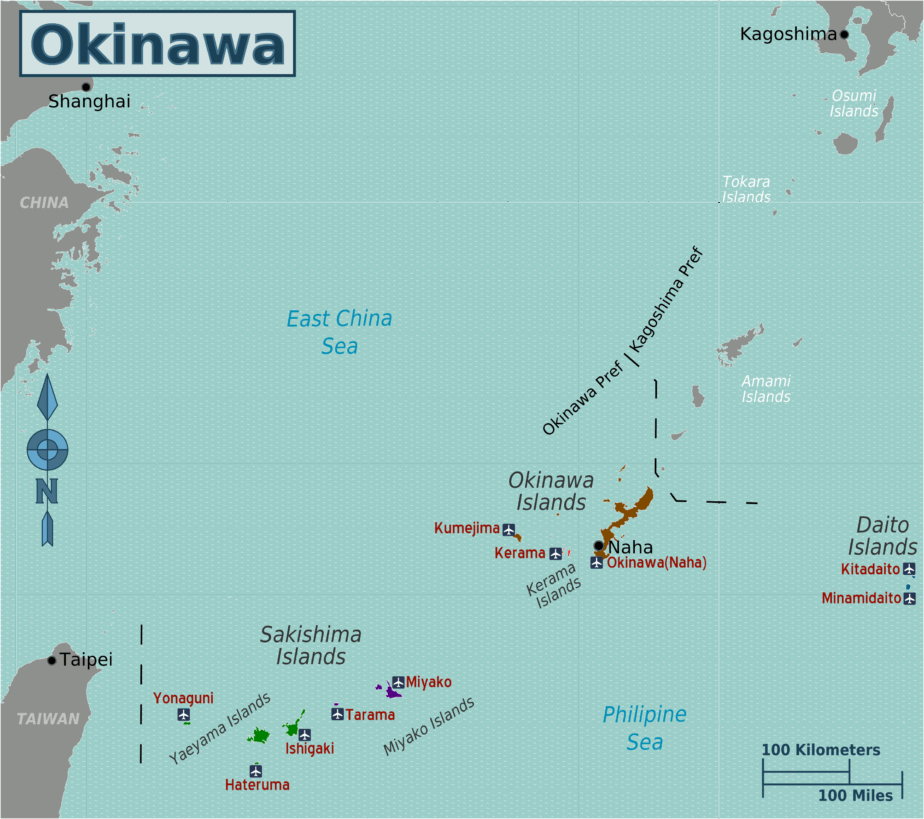
Evacuating some 100,000 civilians from Japan’s Sakishima Islands will be no easy feat, even if these small islands featured airport facilities large enough to accommodate multiple wide-body aircraft, each capable of seating some 300 persons per flight. The Japanese government will almost certainly have to charter, if not requisition, ferries and other civilian-operated merchant vessels, not limited to those operating in the Sakishima Islands and the broader grouping of the Ryukyu Islands. While the Japan Martime Self-Defense Force (JMSDF) and the Japan Air Self-Defense Force (JASDF), as well as the civilian Japan Coast Guard (JCG), will doubtless be called upon to both facilitate such an undertaking and, no less importantly, to escort the vessels of various sizes full of civilians undergoing evacuation, the fact remains that the “evacuation ship” will be an enticing target for Beijing both as it approaches the Sakishima Islands to embark civilians being evacuated, and, more grimly, as said vessels with embarked civilians depart the Sakishima Islands.

All things considered, this envisaged evacuation operation will be a very high-stakes undertaking for Japan. The politcal and humanitarian imperatives of evacuating civilian non-combatants from small islands that are likely to become warzones is wholly understandable, but Tokyo will be assuming considerable operational risk should it decide to task a significant portion of the Japanese surface fleet and combat aircraft fleet toward suporting said evacuation operation in a context in which the military incentives will be to disperse and stay further away from China during what could rapidly transition into the opening phase of the China-Japan portion of a larger war.
The Sakishima Islands are just ~400-550 kilometers from mainland China, 270-510 kilometers from the southern tip of Okinawa island, and ~850-1050 kilometers from the southern tip of Kyushu. Unlike American and Japanese military facilities on Okinawa Island, the Sakishima Islands are highly exposed to Chinese attack. As a result, there is a case to be made that Japan requires at least Beijing’s tacit cooperation to carry out the evacuation of civilians from the Sakishima Islands, let alone from Okinawa Island and elsewhere in the Ryukyu Islands Chain.
It bears emphasis that the evacuation of civilians from the Sakishima Islands appears set to simultaneously take place alongside the deployment of military reinforcements to the Sakishima Islands. Beijing may well decide to press its advantage in Japan’s moment of great vulnerability, not least if the Japanese vessels heading toward the Sakishima Islands to evacuate the civilian population will also be delivering military reinforcements to these islands.

It is only fair for observers to ask why Beijing would decide to be magnanimous and not take full military advantage of Japan’s moment of great vulnerability. The civilians inhabiting the Sakishima Islands and the rest of the Ryukyu Island Chain more generally are, in effect, automatically hostage to Beijing’s mercy, and Beijing will, in the lead up to, let alone during, a war, have free reign to choose between being merciful or taking full advantage of an excellent opportunity to sink a great many Japanese ships and aircraft, whether military or civilian. It bears emphasis that even the mere possibility of China targeting the Japanese evacuation operation will inherently raise the potential cost that Japan will pay for intervening in a cross-strait conflict. Here, it is worth considering that more than 1.5 million civilians inhabit the Ryukyu Island Chain, which is to say some 1.2% of Japan’s total population.
While Japan’s plans to evacuate its civilian population from the Sakishima Islands have caught the attention of news media and foreign observers, the fact that Japan will inherently require at least China’s tacit cooperation has not. Beijing may well decide to press its advantage in Japan’s moment of great vulnerability, and the political and humanitarian imperative of evacuating civilians from what will likely become a warzone may end up becoming a military disaster for Japan, one that may shape the course of a war.
It should be noted that military and non-military vessels used to evacuate civilians from the Sakishima Islands will require naval escorts in a context in which the Japanese surface fleet has considerable qualitative and quantitative deficiencies vis-a-vis China’s ever-evolving and increasingly formidable maritime strike capabilities. The Sakishima Islands are just ~400-550 kilometers from mainland China, 270-510 kilometers from the southern tip of Okinawa island, and ~850-1050 kilometers from the southern tip of Kyushu.
