

Commentary-themed posts are intended to broach or highlight a specific issue, not limited to recent and ongoing events. These posts will typically be much shorter and less detailed than analysis-themed posts.
Something very unusual transpired on 30 March 2024. Japan’s Joint Staff Office announced that a Chinese military aircraft, which in this case happened to be an uncrewed aircraft design, was observed flying in international airspace over the Sea of Japan.
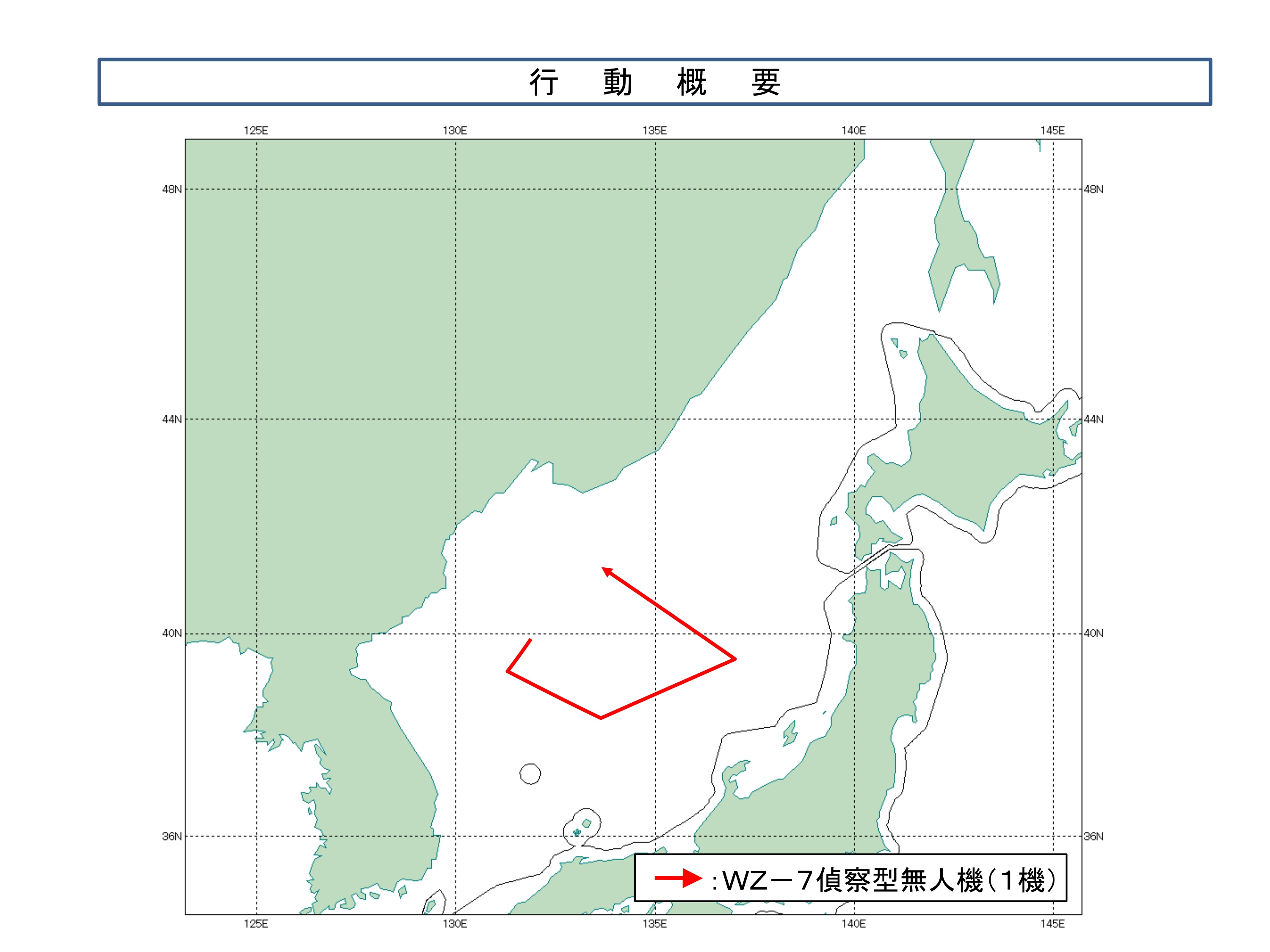


The Chinese uncrewed aircraft in question is reported to have been a WZ-7, a high-altitude jet-powered high-end fixed-wing uncrewed intelligence, surveillance, and reconnaissance (ISR) aircraft design operated by the People’s Liberation Army Air Force (PLAAF) that is broadly analogous to the American RQ-4 Global Hawk, three specimens of which have been ordered for the Japan Air Self-Defense Force (JASDF).


While Japan’s Joint Staff Office has disclosed what appear to be exceptionally irregular WZ-7 flights in the international airspace above the East China Sea and the Philippine Sea both before and after 30 March 2024, the 30 March 2024 flight of a WZ-7 remains exceptionally notable as the sole publicly documented case of a Chinese large fixed-wing military aircraft flying in the Sea of Japan outside the specific and highly transient context of bilateral China-Russia bomber aircraft training flights.
The ascent of Sanae Takaichi to the position of Prime Minister of Japan has been accompanied by a very sharp downturn in bilateral relations between China and Japan. While Japan has experienced an ever-worsening security environment vis-a-vis China over the past fifteen or so years, it is only accurate to state that China has, to date, not played all its cards so as to maximally turn the proverbial screws on Japan. One of the approaches that Beijing can undertake entails what is best understood as the activiation of the Sea of Japan threat vector, a dynamic of exceptional military signifiance that has long remained dormant not as a result of anything that Japan or the United States have done or could have done but because Beijing decided—out of self-interest—to restrict the geographic scope of China-Japan and China-United States military dynamics.
Chinese naval activity in the Sea of Japan remains exceptionally rare, with the deployments of People’s Liberation Army Navy (PLAN) vessels into the Sea of Japan being primarily undertaken so as to facilitate transits to Russian ports that host bilateral China-Russia naval exercises.

With the exception of the 30 March 2024 incident involving a WZ-7 uncrewed aircraft flying in international airspace over the Sea of Japan, the few instances of publicly disclosed PLAAF aircraft activity over the Sea of Japan can be tied to bilateral China-Russia aerial exercises.
As highlighted in an October 2025 SPAS Consulting analysis that examined the military implications of the hypothetical collapse of the Russian state on the China-United States military balance—and, by association, the China-Japan military balance, a very small amount of land separates China from the Sea of Japan. Specifically, China is separated from the Sea of Japan by a distance of just ~10.3 kilometers in orthodromic terms/as the crow flies, with the Tumen River flowing for another ~16.5 kilometers from the easternmost point of the China-Russia border until it reaches the Sea of Japan. In other words, China may not border the Sea of Japan and has no direct port access to the Sea of Japan, but just a very small amount of land determines this.

The 30 March 2024 flight of a PLAAF WZ-7 uncrewed aircraft over the Sea of Japan could not have taken place with a very brief overflight of North Korea and/or Russian territory. Although the answer to the obvious question of whether Beijing formally sought and received permission to undertake such a flight from Pyongyang and/or Moscow is not public knowledge, the seminal incident from March 2024 should highlight a simple truth: Beijing can activate the Sea of Japan threat vector if and when Chinese decision-makers wish to do so.
It bears emphasis that the activation of the Sea of Japan threat vector is not merely about potential PLAAF aircraft flights over the Sea of Japan. A “full-activation” of this long-dormant threat axis/threat vector may also entail the deployment of People’s Liberation Army Rocket Force (PLARF) missile launch brigades across the PLA’s Northern Theater Command (NTC), a sector that Beijing has long deprioritized largely out of self-interest.
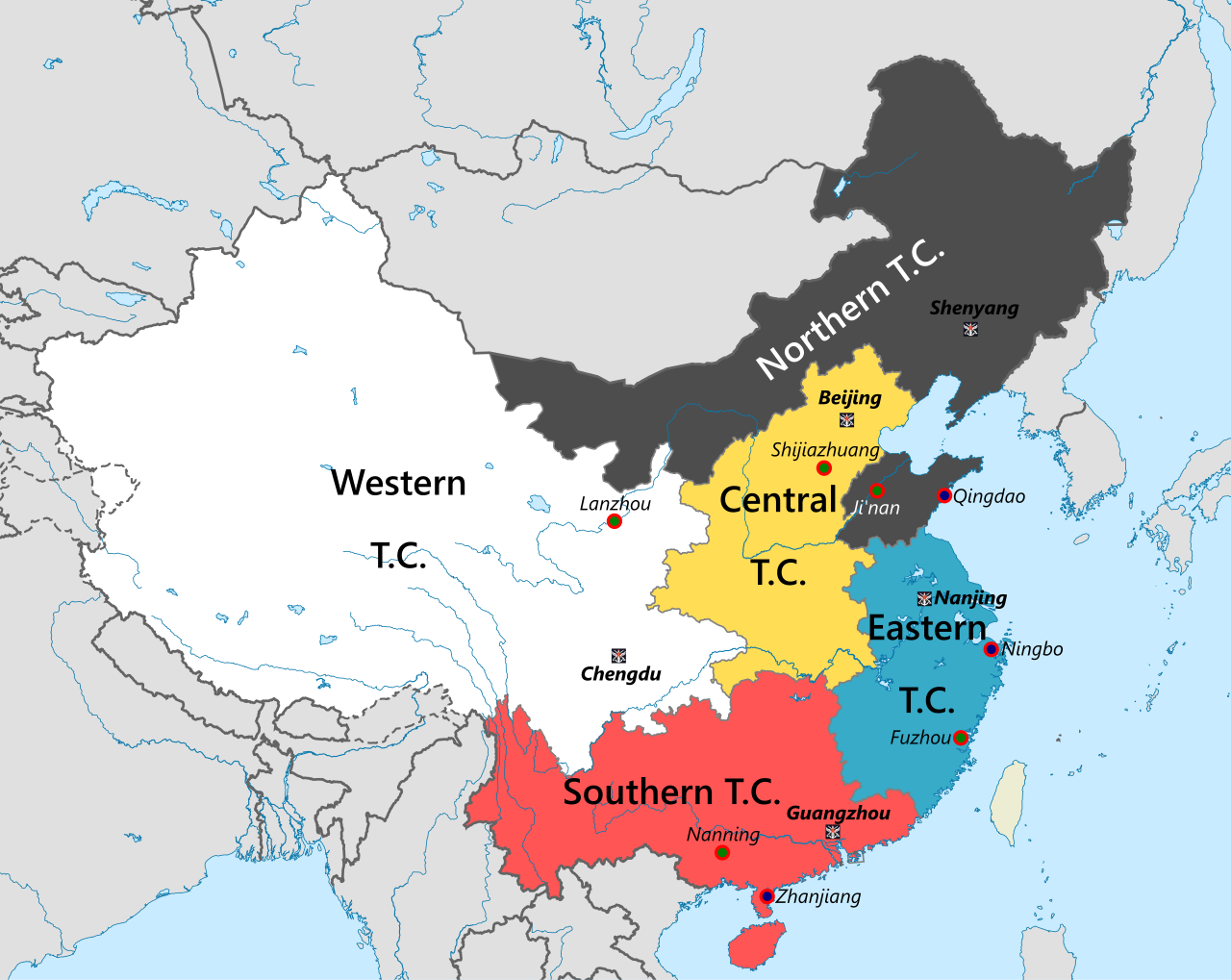
Given the longstanding dispositions of the PLARF’s conventionally-armed missile launch brigades, many observers appear to understandably conceptualize the threat posed by said Chinese missiles as being one that approaches Japan from the west and southwest. Should Beijing activate the Sea of Japan threat vector, however, Chinese ballistic missiles, cruise missiles, and boost-glide vehicles (BGVs, also known as hypersonic glide vehicles or HGVs) will approach Japan from the northwest.
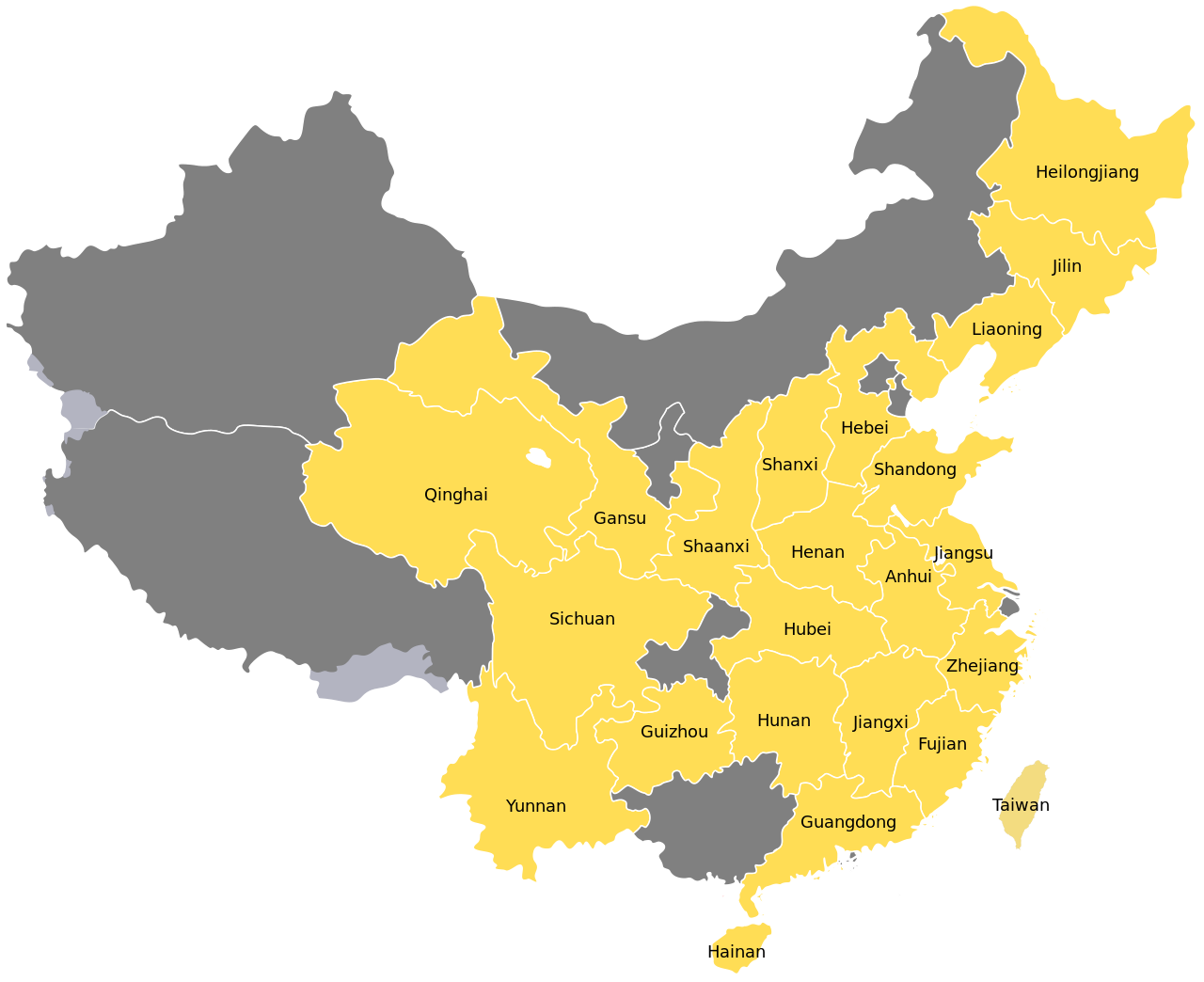
A distance of just ~600 kilometers separates China’s northeastern Heilongjiang province from the northernmost tip of Hokkaido, while just ~700 kilometers separates said Chinese province from the southernmost tip of Hokkaido. Just ~750 kilometers separates China’s northeast from the northernmost tip of Honshu, while just ~810 kilometers separates China’s northeast from the westernmost point of Honshu. Tokyo is just ~1100 kilometers from China’s northeast, while the easternmost part of the Kanto Plain bordering the Pacific Ocean is around 1170 kilometers from China’s northeast. For context, Tokyo is around 1550 kilometers from the easternmost point of China’s Shandong Peninsula, while Tokyo is around 1750 kilometers from Shanghai. Sapporo, meanwhile, is over 1700 kilometers from the easternmost point of China’s Shandong Peninsula, while being over 2170 kilometers from Shanghai.
Simply stated, the entirety of Hokkaido and Honshu are much closer to China if and when Beijing decides to activate the long-dormant Sea of Japan threat vector. Should China decide to do so, it will be able to launch shorter-range—and, all else being equal, less expensive and, as such, more plentiful—missiles against targets across the primary landmasses of the Japanese archipelago. As China-Japan relations further detioriate, the seemingly one-off 30 March 2024 incident in which a Chinese WZ-7 uncrewed aircraft flew in international airspace over the Sea of Japan may come to be seen as a harbinger of a new normal that has the potential to profoundly undermine Japanese security and greatly expand the challenges that both Japan and the United States face in terms of air defence and ballistic missile defence.