
The Hypothetical Collapse Of The Russian State And China-United States Military Balance
🇨🇳🇯🇵 🇷🇺 🇺🇸 Commentary

Commentary-themed posts are intended to broach or highlight a specific issue, not limited to recent and ongoing events. These posts will typically be much shorter and less detailed than analysis-themed posts.
The rebellion of Yevgeny Prigozhin’s Wagner Group against the Russian state in June 2023, which unfolded in a context of a much-anticipated Ukrainian offensive and cross-border raids by Russian citizens in Ukrainian military units subordinate to Ukrainian military intelligence, amounted to the first time in the Russia-Ukraine War that the future of the Russian state, with or without Vladimir Putin at its helm, was even in question. Around the time, the head of Ukrainian military intelligence rationalized his organization’s establishment of such (renegade) Russian-manned Ukrainian military units as a part of a gambit through which Ukraine could, in effect, indirectly occupy stretches of territory on the Russian side of the international border in the event of a collapse in Moscow’s power and authority across the Russian Federation.
While the unsuccessful June 2023 Wagner rebellion is, as of this writing, the closest that Russia has approached state collapse over the course of the Russia-Ukraine War, it nevertheless bears emphasis that there was and remains no indication that Prigozhin, a quite extreme Russian nationalist, had any intention of weakening Moscow’s control over its expansive territory, or that Putin loyalists had any intention of initiating a civil war had Wagner Group columns reached Moscow and ousted Putin from the Kremlin. Even so, the June 2023 episode catalyzed thinking as to the possible implications of the collapse of the Russian state for Ukraine and Europe more generally. Far less attention has, however, been given to the possible implications of the collapse of the Russian state for East Asia.
Oleg Kozhemyako, the governor of Russia’s Primorsky Krai, a Russian province which borders China, North Korea, and the Sea of Japan and has the port city of Vladivostok as its capital, recently made minor headlines for publicly warning about possible Chinese irredentism about the Russian Far East, which was formally part of Qing China until ca. 1860. As things stand, such irredentism appears to be found more among Chinese netizens than the upper echelons of the Chinese Communist Party, and there is presently no indication of a rupture in bilateral relations, not least while both Vladimir Putin and Xi Jinping remain in power, that would be required for Chinese irredentism toward Russia’s far eastern territorial holdings to become state policy. This does not, however, necssarily mean that Beijing will seek to preserve Russia’s current borders, the far eastern sections of which are evidently a product of “unequal treaties” imposed upon Qing China by the Russian Empire over the course of the 1800s, in the event of the collapse of the Russian state under the rule of Vladimir Putin or his eventual successors.
I am not a political analyst, and I have no intention of getting into the weeds of this complex and inherently hypothetical topic. As a military analyst, however, I cannot help but notice that China is separated from the Sea of Japan by just ~10.3 kilometers in orthodromic terms/as the crow flies and that the Tumen River flows for another ~16.5 kilometers from the easternmost point of the China-Russia border until it reaches the Sea of Japan. In other words, China may not border the Sea of Japan and has no direct port access to the Sea of Japan, but just a small amount of land, which was formally part of Qing China until ca. 1860, determines this.
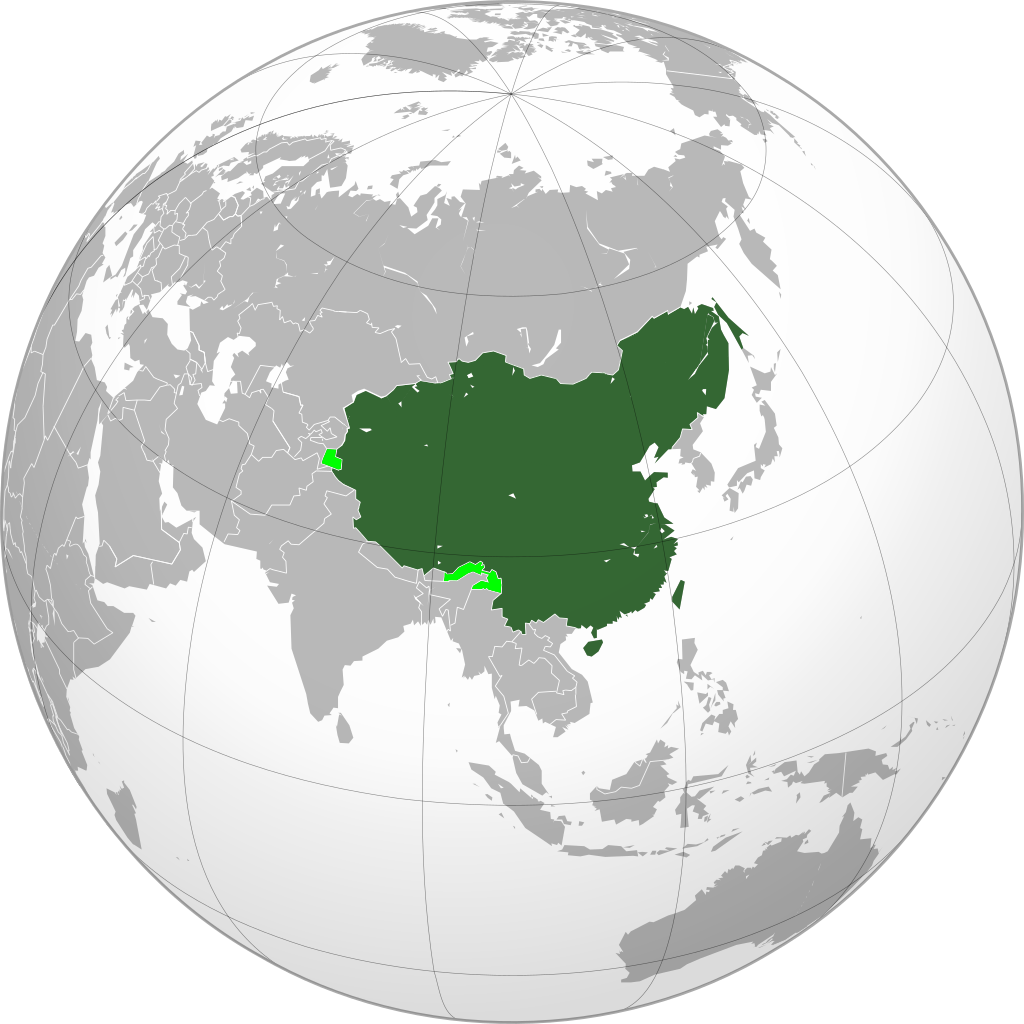
In the hypothetical event of the collapse of the Russian State, it does not strain credulity to imagine a scenario in which Chinese decision-makers must make—not necessarily mutually exclusive—choices between:
Facilitating the restoration of Moscow’s control in the Far East in accordance with border treaties signed by the Russian Empire and Qing China.
Supporting any Russian breakaway provinces in their attempt(s) to secure either independence or greater autonomy from Moscow and power centers in western Russia more generally, provided, of course, that such Russian breakaway provinces fall under the influence of Beijing.
Actively intervening in a power struggle, which may turn into a Russian Civil War, at least in some parts of that expansive country, with the aim of restoring Beijing’s control over territories that were formally part of Qing China until ca. 1860. Whether China would then establish a puppet state—something (ironically) in the vein of Manchukuo, or formally incorporate such territory in the People’s Republic of China is another matter.
Why even undertake a cursory discussion about a hypothetical set of events that is, all things considered, unlikely to come to pass, given how Vladimir Putin’s Russia and its successor(s) will likely still have control over thousands of nuclear weapons, analytically worthwhile? While much remains uncertain about the trajectory of the fast-evolving military-technological competition between China and the United States, I would make the argument that some of the most consequential areas of uncertainty on this matter are only partially about China and the United States. These include the status of the Korean Peninsula, the status of the Sea of Japan, and, of course, the status of the Russian Federation in the event of a major war, particularly a major protracted war, between China and the United States.
The Status Of the Korean Peninsula
This includes the impossible-to-know question of whether any potential conflict on the Korean Peninsula during a major war between the United States and South Korea will even involve the United States, let alone China. Should China intervene in a conflict on the Korean Peninsula, Chinese intervention is unlikely to be limited to the movement of Chinese ground forces across the Yalu and Tumen rivers in the manner of 1950. It bears emphasis that South Korea is highly exposed to Chinese strike capabilities to a far greater degree than Japan by virtue of geographic proximity to China. Should China intervene in a conflict on the Korean Peninsula that transpires in a major war between China and the United States, China will also presumably be able to make use of North Korean airspace to attack targets in Japan.
The Status Of The Sea Of Japan
Related to the status of the Korean Peninsula is the status of the Sea of Japan in a major war, particularly a major protracted war, between China and the United States, in which Japan is also a belligerent. It bears emphasis that present-day China can, should Chinese decision-makers make the decision and allocate the requisite resources, activate the “Sea of Japan threat axis/threat vector” through which to target Japan, including the entirety of Honshu and Hokkaido, with shorter-range and, all else being equal, less expensive and, as such, likely more plentiful, strike munitions than is presently the case when Chinese munitions are primarily launched toward Japan from the southwest. Simply stated, the activation of the “Sea of Japan threat axis/threat vector” is likely to profoundly undermine Japanese security and greatly expand the challenges that both Japan and the United States face in terms of air and ballistic missile defence.
The Status of the Russian Federation
The status of the Russian Federation in a major war, particularly a major protracted war, between China and the United States. While there has recently been public discussions about the possibility of war between Russia and European NATO countries while a major war transpires between China and the United States in the Western Pacific, less attention has been given to the possibility that China may, directly or indirectly, participate in a war between Russia and European NATO countries (during a war between China and the United States), and, not unrelatedly, whether Russia will have any part to play in support of China during a war between China and the United States. Beyond selling natural resources to China and serving as a conduit through which wartime China, which is likely to be subject to a fairly effective long-distance maritime and aerial blockade, can access the rest of the world, Russia may formally or informally provide China access to its airspace over the Russian Far East. This will affect the viability of Chinese polar bomber flights that can be used to target American airbases and associated critically important logistical facilities in Alaska, as well as the viability of Chinese nuclear-armed bomber flights to attack targets in North America. It also has implications for the viability of Chinese aerial and naval operations in the North Pacific aimed at interdicting supplies and reinforcements heading to Japan from North America.
Yevgeny Prigozhin is long dead, his Wagner Group is fully subordinate to the Russian state with Vladimir Putin as its ultimate leader, and Russia appears unlikely to undergo state collapse any time soon, notwithstanding uncertainties as to what will follow Putin’s eventual and ultimate death. Even so, the very possibility of the collapse of the Russian state, which came into clear view in June 2023 and has, in effect, recently been resurrected by the governor of Russia’s Primorsky Krai province, is something that anyone interested in the evolving military balance in the Western Pacific should pay attention to. A fairly small sliver of land currently results in a situation in which the “Sea of Japan threat axis/threat vector” is, all things considered, presently inactive. This not only has major implications for Japan’s security but also shapes military dynamics in the North Pacific, an area of water that most ships and aircraft travelling between North America and northeastern Asia, including Japan, transit, given the orthodomic/great circle distances. A Chinese port in the Sea of Japan—or at least Chinese access to a port in the Sea of Japan, regular Chinese naval operations in the Sea of Japan, and Chinese aircraft and ships operating in the Northern Pacific via the Sea of Japan may be neither a present-day reality nor a likely forthcoming reality, but it is not an impossibility.
Some related posts:


