

As explained in a recent post, military media outlet Naval News claims that the nuclear-powered submarine that China recently launched at the Bohai Shipyard near Huludao along the Bohai Sea is not yet another Type 093B-class nuclear-powered attack submarine (SSN) but the first completed hull of the long-anticipated next-generation Type 095-class SSN.
https://www.spasconsulting.com/p/report-indicates-that-china-has-launched
As the above post explained, much rests on the maturity and competitiveness of the new Type 095-class SSN, and exceedingly little information is publicly available about the Type 095-class design at this time. In the absence of information, the above post identified several important areas of uncertainty and raised questions to be answered as new information is uncovered and rendered available. This post broaches the potential implications of a new Chinese SSN design of currently unknown characteristics and performance for Japan. Japan has much to lose if China experiences a major qualitative and/or major quantitative expansion of its undersea warfare capabilities, something that a new and potentially much-improved SSN can offer the People’s Liberation Army Navy’s (PLAN) current submarine fleet.
While Japan has long encountered a large fleet of Chinese submarines, China only operated non-competitive diesel-electric submarine (SSK) designs into the 1990s. Although the situation progressively changed over the course of the 1990s and through the ca. 2010 timeframe, the PLAN submarine fleet remained composed of increasingly more capable but nevertheless qualitatively limited SSK designs. The introduction of the Chinese-built Type 039A-class design (U.S. ONI: Yuan-class) amounted to a major qualitative breakthrough for the PLAN, and a major quantitative breakthrough as it was built and deployed versions of this Chinese SSK design in increasing numbers into the 2020s. The Type 039A-class, and its successor, the significantly altered Type 039C-class (U.S. ONI: Yuan-class mod), nevertheless remain large ocean-going SSKs optimized for operations in the deep waters of the western half of the Philippine Sea with the aim of enhancing China’s maritime strike capabilities by serving as forward sensor nodes and anti-ship missile launchers.


To this end, China developed and deployed not only the YJ-18 cruise missile—a primarily subsonic design with a terminal stage rocket-boosted sprint vehicle—but also the recently unveiled YJ-19, which appears to be a scramjet-powered supersonic anti-ship missile that can be launched out of a standard 533 mm diameter torpedo tube.


https://www.spasconsulting.com/p/unveiling-of-six-new-chinese-anti

With public indications that Chinese submarines are increasingly being employed as forward sensor nodes and anti-ship missile launchers by the PLAN, it bears emphasis that the threat that Chinese submarines can pose to the JMSDF, U.S. Navy and others is very different than the torpedo-centric submarine threat of popular imagination. A Chinese submarine may, using external target location data, launch an anti-ship missile at a target ship that is located several hundred kilometers away, which is to say far beyond the maximum detection range of a warship’s sonars and beyond the maximum range of its ship-based anti-submarine armament. This approach amounts to a qualitatively distinct threat to the JMSDF, one that the Japanese surface fleet is not currently optimized to counter in multiple respects:
https://www.spasconsulting.com/p/japans-navy-is-poorly-positioned
Although China has built and deployed a steadily expanding fleet of second-generation Type 093-class (U.S. ONI: Shang-class) nuclear-powered attack submarines (SSNs) over the past twenty or so years, what little information is available in the public domain strongly indicates that even the latest Type 093B-class SSNs leave much to be desired. China and the PLAN seemingly agree, given the development and reported launch of the first Type 095-class SSN hull, which is presumably the successor to the long-running Type 093-class design.
Whatever the presumed qualitative attributes of the Type 093-class, not least vis-a-vis the formidable anti-submarine warfare capabilities of both the Japan Maritime Self-Defense Force (JMSDF) and the U.S. Navy (USN), the fact remains that—uncertainties about the total number of Type 093-class hulls in existence notwithstanding—the Chinese SSN fleet remains very small. This limits how many Chinese SSNs of any given design may be deployed at sea on any given day and, as such, the practical reach of China’s SSN force, which is incomparably better-suited to undertaking long-range and long-endurance deployments, including deployments around the Japanese archipelago and the maritime approaches thereto.
Whatever the presumed—in the absence of credible information—qualitative attributes of China’s new Type 095-class SSN design, which presumably amounts to an improvement over the preceding Type 093B-class design, the advent of a new Chinese SSN design presents a very major potential threat to Japan, even if the Type 095-class remains significantly inferior in terms of various qualitative attributes relative to the latest American Virginia-class SSNs. The reasons for this are straightforward.
China made major investments toward expanding the Bohai Shipyard, which specializes in building nuclear-powered submarines, in the 2010s—to what end, one must ask.
SSNs remain a glaring area of both qualitative and quantitative shortcomings for the PLAN, which has closed capability gaps in many important areas vis-a-vis both Japan and the United States.
The PLAN requires a large fleet of SSNs if for no other reason than to improve the anti-submarine capabilities of China’s expanding number of aircraft carrier groups and surface action groups, let alone to undertake long-range deployments in distant waters or, more to the point of this post, operate around the Japanese archipelago and along the maritime approaches to Japan, particularly for vessels going to/from North America.
China’s new Type 095-class SSN may or may not be very competitive relative to the ever-moving dynamic target set by American submarine technology. The Type 095-class may, however, be good enough for Beijing to allocate the resources required to make full use of the much-expanded production facilities at the Bohai Shipyard. This can result in a situation in which the PLAN may deploy a greatly expanded SSN force over the course of the 2030s.
While one can indulge in speculation as to how many new Type 095-class SSNs the PLAN may come to deploy, for the present purposes, it should suffice to say that the ability to maintain even a single SSN on station around the Japanese archipelago and the maritime approaches thereto will constitute a new type of threat for Japan, which has long staked much on its ability to interdict Chinese endurance-constrained SSKs as these transit the Miyako Strait and other channels along Japan’s Ryukyu Islands Chain to reach the Philippine Sea and, no less importantly given the fact that SSKs do not have nuclear propulsion, return back to port to refuel, resupply, and rearm. An expanded Chinese SSN force will introduce a new dynamic: Chinese submarines that may be detected in the favourable underwater geographic along the Ryukyu Island Chain, along which Japan has long established undersea acoustic sensors, only to break free into the open waters of the Pacific Ocean and, for example, patrol the maritime approaches to Tokyo Bay, or even undertake patrols in the vicinity of the Aleutian Islands in the North Pacific so as to interdict ships transiting to/from the western coast of North America.
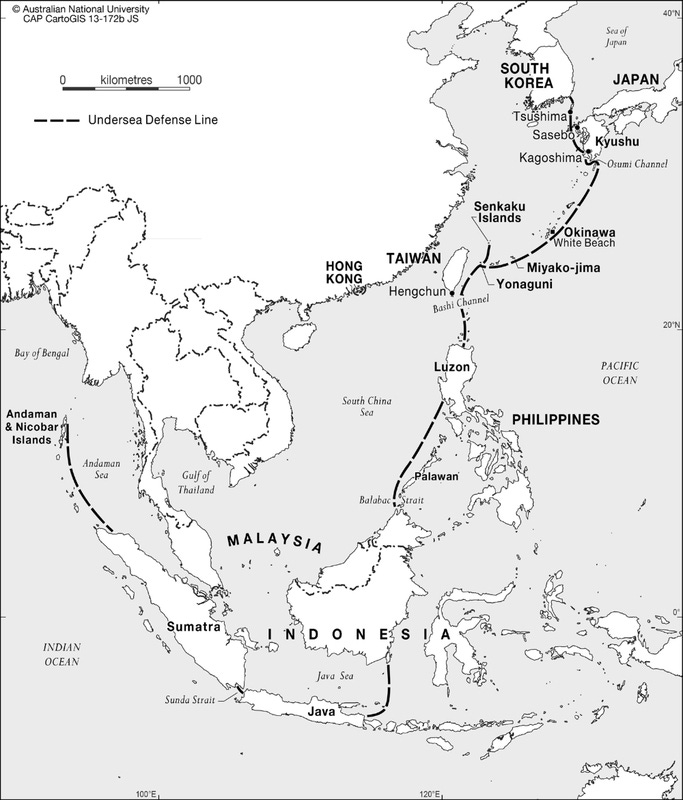
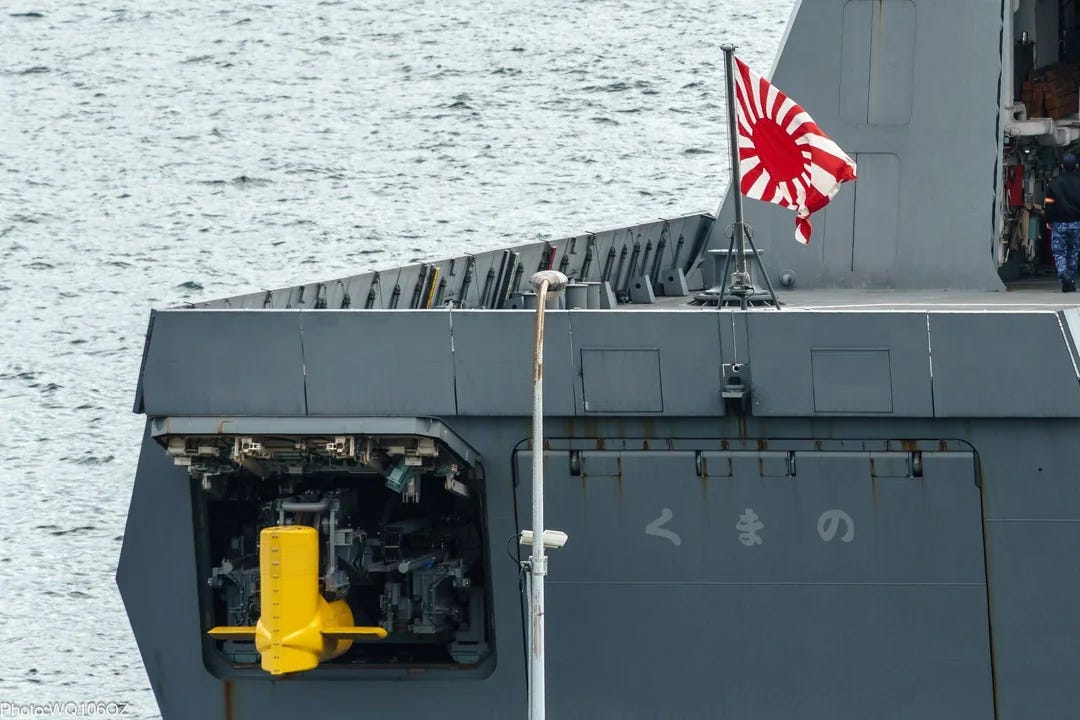
A significantly expanded Chinese SSN force will constitute a qualitatively new and distinct threat to Japan, even if China’s new Type 095-class SSNs remain significantly inferior to the latest American Virginia-class SSNs. Here, as elsewhere, the fact remains that China does not always need perfect or world-leading military systems to significantly alter the regional military balance in its favour. Needless to say, the more competitive the new Type 095-class SSN is relative to the latest in American submarine technology, the greater the challenge that Japan will face in securing its maritime approaches in times of crisis and war in the 2030s and beyond. Japan has, for decades, been able to use forward-sensor and anti-submarine capability barriers to greatly blunt, if not neutralize, the threat posed by Soviet, Chinese, and North Korean submarines. The mere prospect of a large fleet of potentially far more competitive Chinese SSNs should raise alarm bells in Tokyo unless Japanese officials are aware of some fundamental qualitative shortcomings of the new Chinese Type 095-class SSN design that will significantly constrain its military implications for Japan without being sensitive to how many China comes to build and deploy over the coming years.


In the absence of information, observers tend to speculate, but serious analysts endeavour to identify important areas of uncertainty and raise questions to be answered as new information is uncovered and rendered available at a later date. This SPAS Consulting analysis merely presumes that the new Type 095-class will constitute a qualitative improvement of some sort over the preceding Type 093B-class SSNs and that China may find the Type 095-class design to be satisfactory enough to make full use of the much-expanded facilities of the Bohai Shipyard, which is the only Chinese shipyard to build “full-size” nuclear-powered submarines. There are very major analytical uncertainties at play, and the fact remains that Japan has the most to lose in the event of any major qualitative and/or quantitative advances in China’s undersea warfare capabilities.
Some additional questions to consider:
Will the JMSDF be forced to hold its SSKs and anti-submarine warfare aircraft, helicopters, and warships “in the rear,” such as around the approaches to Tokyo Bay and the Seto Inland Sea, in order to counter a prospectively qualitatively and/or quantitatively enhanced Chinese SSN force?
What implications will such a development have on Japan’s ability to prosecute its preferred war plans alongside the United States? Being forced into a defensive posture while having one of the world’s longest coastlines as an archipelagic nation is unlikely to be a welcome development for Tokyo.
What implications will the Type 095-class have in other sectors, above all around the Aleutian Islands in the North Pacific, which are part of Alaska? Japan has long been able to take the security of its maritime lines of communication with North America for granted in the absence of a qualitatively and/or quantitatively significant Chinese SSN fleet.
The Type 095-class and future Chinese nuclear-powered submarines that draw upon, and perhaps expand upon, whatever qualitative advances it encompasses relative to preceding Chinese nuclear-powered submarines, may have a significant land-attack capability. Japan’s current air defence and ballistic missile defence architecture is optimized against threats that approach Japan from the northwest, west, and southwest. Chinese strike munitions that approach Japan from the east may bypass Japan’s current defences, and require significant adjustments and resource allocations. Here also, submarines constitute a lot more than a means of launching torpedoes.