
The War Against Iran and America's Longstanding "Chinese Cruise Missile Sponge" Problem
🇨🇳 🇯🇵 🇺🇸 | Memo

Memos will briefly refer to a news development, media report, new or historic image/video, map, and the like. You will not receive email notifications for newly posted memos, which can be found via specific tags corresponding to specific sections/newsletters, where you will find longer posts.
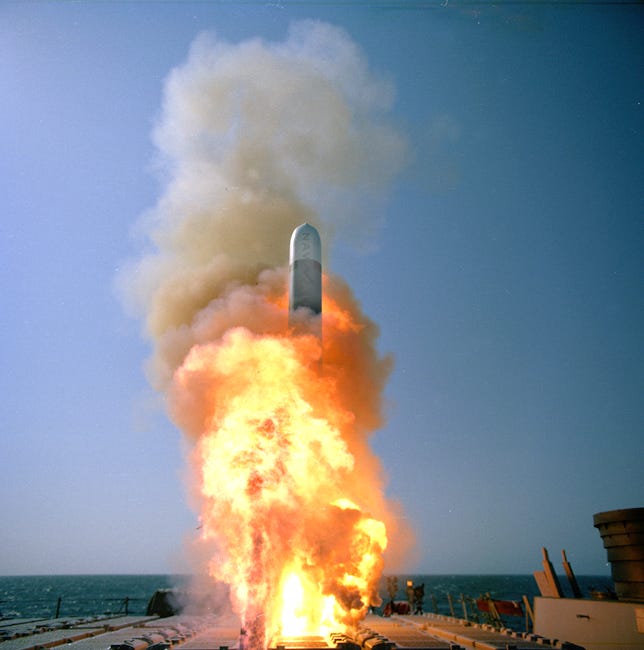
American military analysts have long likened China to a “cruise missile sponge.” That is, the number of potential targets for American strike munitions in China has long exceeded the number of stand-off strike munitions, such as cruise missiles, that American military planners can allocate in wargames and military plans. In recent years, however, the trajectory of American strike munition production and procurement, whether in terms of existing strike munitions or lower-cost and lower payload-range designs intended for very large production runs, suggested that the longstanding “cruise missile sponge” dynamic would eventually become less of a primary analytical consideration. The American and Israeli war against Iran has, however, severely depleted the American arsenal in this and other areas.
Public estimates from CSIS and news reports suggest that the United States expended around half of its prewar stocks of 3100 or so Tomahawk land-attack cruise missiles and a quarter of its prewar stocks of 4400 or so AGM-158 JASSM land-attack cruise missiles against Iran. China remains a veritable “cruise missile sponge,” but public estimates suggest that there are, at present, some 2500 or so fewer American cruise missiles to go around should the United States go to war against China. American stocks will eventually be replenished over the coming years, but that will come at the cost of the previously scheduled expansion of the American arsenal, which will be delayed absent even more investments and efforts toward further expanding munitions production. Fortunately for the United States, American companies are set to produce a series of new lower-cost and lower payload-range strike munitions intended for very large production runs. As things stand, the United States may—out of necessity, not design—come to place unexpectedly great emphasis on the new crop of lower-end strike munitions in military plans directed against China over the coming years.
The externalities of the as-yet unresolved American and Israeli war against Iran are many and multifaceted. Some of the most consequential externalities are to be experienced in the Western Pacific, not least by Japan, which can no longer count on its ally to have sufficient stocks of land-attack cruise missiles as well as ballistic missile defence interceptors, at least not in the near term. It bears emphasis that the situation is doubly bad for Japan and other American allies and partners in the Western Pacific: not only does the United States have fewer munitions to expend on its own behalf or on their behalf, but American allies will also have to wait longer for deliveries were they to place new orders now.


